Why the score varies
This ingredient is made commercially by more than one route, and ISO 16128 scores the feedstock actually used. Without a supplier certificate of origin the value cannot be claimed.
| Route | Feedstock | NOI | Share | Notes |
|---|---|---|---|---|
| Oleochemical | Coconut caprylic acid | 1.00 | Common for natural-positioned grades | Natural origin |
| Petrochemical | 1-Octene from ethylene | 0.00 | Common | Fully synthetic |
How we scored it
How it’s made
Where it comes from
Plant route: reduction of coconut caprylic acid and hydroxylation. Petrochemical route: epoxidation and hydrolysis of 1-octene.
The industrial synthesis of caprylyl glycol (2-ethylhexyl-1,3-hexanediol) typically involves a multi-step process starting from petrochemical feedstocks. A common route begins with the aldol condensation of butyraldehyde, which is derived from propylene via hydroformylation (oxo process). This condensation yields 2-ethylhexenal.
Subsequently, 2-ethylhexenal undergoes hydrogenation. This hydrogenation step can be carried out in two stages or a single stage depending on the desired product and process. Initially, the aldehyde group is reduced to an alcohol, forming 2-ethylhexanol. Further reaction or a different pathway involving the unsaturated aldehyde can lead to the diol structure. Alternatively, caprylic acid (octanoic acid), which can be sourced from both natural fats and oils (like coconut oil) or petrochemical routes, can be reduced to capryl alcohol, and then further processed. However, the dominant commercial route for cosmetic grade caprylyl glycol is the petrochemical pathway.
The hydrogenation is typically performed using heterogeneous catalysts, such as nickel-based catalysts (e.g., Raney nickel) or precious metal catalysts (e.g., palladium or platinum on carbon), under elevated temperatures (e.g., 100-200 °C) and pressures (e.g., 50-200 bar) in the presence of hydrogen gas. The reaction is usually carried out in a liquid phase or gas phase reactor. Following the reaction, the crude product is purified through distillation to remove unreacted starting materials, byproducts, and catalyst residues, ensuring the high purity required for cosmetic applications.
In plain English
Caprylyl glycol is a versatile ingredient often found in skincare and cosmetic products. It's a synthetic compound that acts as a multi-functional agent, helping to improve the feel of products on your skin and keeping them stable. Think of it as a helper ingredient that enhances the overall performance and texture of your favorite creams, lotions, and serums.
Its primary role is to condition the skin, making it feel smoother and softer. It also has humectant properties, meaning it can help attract and retain moisture, contributing to skin hydration. Additionally, caprylyl glycol is known to boost the effectiveness of traditional preservatives, allowing formulators to use less of them while still ensuring the product remains safe and free from microbial contamination. This makes it a valuable component in modern cosmetic formulations.
CosIng definition: Caprylyl Glycol is the diol that conforms to the formula
Natural alternatives with the same function
Adenosine is a naturally occurring compound found in all living cells, playing a vital role in energy transfer…
Aloe Barbadensis Leaf Juice 100% natural originAloe Barbadensis Leaf Juice, commonly known as aloe vera, comes directly from the thick, fleshy leaves of the…
Argan Oil 100% natural originArgan oil is a luxurious oil derived from the kernels of the Argan tree, which is primarily found…
Ascorbic Acid 100% natural originAscorbic acid is the scientific name for Vitamin C, a well-known antioxidant that plays a crucial role in…
Ascorbyl Glucoside 100% natural originAscorbyl Glucoside is a stabilized form of Vitamin C, a popular ingredient known for its antioxidant and skin-brightening…
Azelaic Acid 100% natural originAzelaic acid is a dicarboxylic acid that occurs naturally in wheat, rye, and barley. In cosmetics, it's often…
Structure
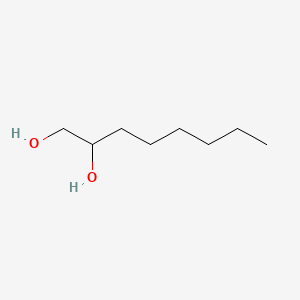
octane-1,2-diol
References
- 1ISO 16128-1:2016 and ISO 16128-2:2017 — Guidelines on technical definitions and criteria for natural and organic cosmetic ingredients and products. ISO, Geneva.
- 2Caprylyl Glycol. PubChem CID 14231. National Center for Biotechnology Information. pubchem.ncbi.nlm.nih.gov ↗
- 3CAPRYLYL GLYCOL. CosIng — European Commission cosmetic ingredient database. ec.europa.eu/cosing ↗
- 4CAPRYLYL GLYCOL. CosIng u2014 European Commission database for information on cosmetic substances and ingredients. https://ec.europa.eu/growth/tools-databases/cosing/search?search=CAPRYLYL%20GLYCOL