How we scored it
Where it comes from
Petrochemical hydroquinone glycosylated enzymatically with starch-derived glucose or sucrose.
The most common industrial synthesis of alpha-arbutin involves the regioselective glycosylation of hydroquinone with a protected glucose derivative, followed by deprotection. A key method is the Koenigs-Knorr reaction or modifications thereof, where hydroquinone is reacted with an activated glycosyl halide (e.g., acetobromo-alpha-D-glucose) in the presence of a promoter and a base. Alternatively, enzymatic glycosylation using glycosyltransferases can be employed, but this is less common for large-scale commercial production of alpha-arbutin itself, though enzymes are often used in the synthesis of the glycosyl donor.
The reaction typically requires careful control of conditions to favor the formation of the alpha-anomer over the beta-anomer and to ensure regioselectivity at the para-position of hydroquinone. Solvents such as acetonitrile, dichloromethane, or toluene are commonly used. Catalysts or promoters like silver salts (e.g., silver triflate) or Lewis acids can be employed in chemical glycosylation. The reaction temperature is usually maintained between 0°C and room temperature, depending on the specific reagents and catalyst system.
Following the glycosylation step, any protecting groups on the glucose moiety (e.g., acetyl groups) are removed, typically through hydrolysis under basic or acidic conditions, or via catalytic hydrogenation. The crude alpha-arbutin is then purified through recrystallization from suitable solvents (e.g., ethanol/water mixtures) or chromatography to achieve the high purity required for cosmetic applications. The overall process relies heavily on petrochemical-derived starting materials and reagents.
In plain English
Alpha-arbutin is a popular ingredient used in skincare products, particularly those aimed at brightening the complexion and reducing the appearance of dark spots. It works by inhibiting the enzyme tyrosinase, which is responsible for producing melanin, the pigment that gives skin its color. By slowing down melanin production, alpha-arbutin helps to create a more even skin tone and reduce hyperpigmentation.
Industrially, alpha-arbutin is synthesized through a chemical process. The main building blocks are hydroquinone, which is derived from petroleum, and a sugar molecule. These are chemically linked together under controlled conditions. While there are some research efforts into more sustainable, bio-based routes, the vast majority of alpha-arbutin available on the market today is produced using this petrochemical-based synthesis.
CosIng definition: Alpha-Arbutin is the organic compound that conforms to the formula:
Natural alternatives with the same function
Adenosine is a naturally occurring compound found in all living cells, playing a vital role in energy transfer…
Aloe Barbadensis Leaf Juice 100% natural originAloe Barbadensis Leaf Juice, commonly known as aloe vera, comes directly from the thick, fleshy leaves of the…
Argan Oil 100% natural originArgan oil is a luxurious oil derived from the kernels of the Argan tree, which is primarily found…
Ascorbic Acid 100% natural originAscorbic acid is the scientific name for Vitamin C, a well-known antioxidant that plays a crucial role in…
Ascorbyl Glucoside 100% natural originAscorbyl Glucoside is a stabilized form of Vitamin C, a popular ingredient known for its antioxidant and skin-brightening…
Azelaic Acid 100% natural originAzelaic acid is a dicarboxylic acid that occurs naturally in wheat, rye, and barley. In cosmetics, it's often…
Structure
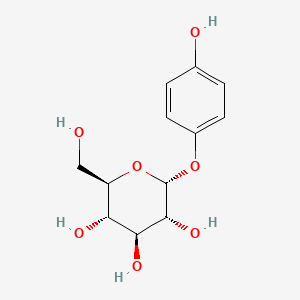
(2R,3S,4S,5R,6R)-2-(hydroxymethyl)-6-(4-hydroxyphenoxy)oxane-3,4,5-triol
References
- 1ISO 16128-1:2016 and ISO 16128-2:2017 — Guidelines on technical definitions and criteria for natural and organic cosmetic ingredients and products. ISO, Geneva.
- 2Alpha-Arbutin. PubChem CID 158637. National Center for Biotechnology Information. pubchem.ncbi.nlm.nih.gov ↗
- 3ALPHA-ARBUTIN. CosIng — European Commission cosmetic ingredient database. ec.europa.eu/cosing ↗
- 4ALPHA-ARBUTIN. CosIng u2014 European Commission database for information on cosmetic substances and ingredients. https://ec.europa.eu/growth/tools-databases/cosing/search?search=ALPHA-ARBUTIN