How we scored it
Where it comes from
Glucose fermentation with Bacillus subtilis, or enzymatic hydrolysis of yeast ribonucleic acid. No chemical synthesis from petrochemicals is used at scale.
The industrial synthesis of Adenosine (9-β-D-ribofuranosyladenine) is a multi-step process that predominantly relies on petrochemical feedstocks. A common approach involves the synthesis of the adenine base and the ribose sugar separately, followed by their glycosidic coupling. The adenine base can be synthesized through various routes, often starting from compounds like formamide or hydrogen cyanide, which are ultimately derived from natural gas or petroleum.
The ribose sugar moiety is typically synthesized from petrochemical precursors as well. For instance, it can be derived from glucose, which itself can be produced synthetically or obtained from biomass, but the subsequent chemical transformations to achieve the specific D-ribofuranose structure often involve petrochemical reagents and processes. Alternatively, ribose can be synthesized from simpler C1-C3 building blocks derived from syngas (CO/H2), which is a product of steam reforming of natural gas or coal gasification.
The crucial step is the glycosidic coupling, where the adenine base is attached to the ribose sugar. This is often achieved through a condensation reaction, frequently employing a protected ribose derivative and an activated adenine derivative. Common methods include the Hilbert-Johnson reaction or variations thereof, which may involve reagents like silylating agents (e.g., hexamethyldisilazane) and Lewis acid catalysts (e.g., SnCl4, TMSOTf) to promote the formation of the N-glycosidic bond. The reaction conditions, including temperature and solvent, are carefully controlled to favor the desired β-anomer.
Following the coupling reaction, extensive purification steps are required to isolate high-purity Adenosine suitable for cosmetic and pharmaceutical applications. These steps typically involve crystallization, chromatography (e.g., ion-exchange or reverse-phase), and filtration to remove unreacted starting materials, byproducts, and residual catalysts. The final product is usually obtained as a white crystalline powder.
In plain English
Adenosine is a naturally occurring compound found in all living cells, playing a vital role in energy transfer and cellular processes. In cosmetics, it's valued for its anti-aging properties, helping to smooth the appearance of wrinkles and fine lines by promoting skin's natural firmness and resilience. It's also known to have soothing and skin-restoring benefits, making it a popular ingredient in anti-wrinkle and revitalizing skincare products.
While adenosine is a fundamental building block of life, the adenosine used in cosmetic products is typically produced through industrial chemical synthesis. This process starts with basic chemical components derived from petroleum. These components are then carefully assembled through a series of complex chemical reactions, similar to how other essential molecules are manufactured in laboratories and factories. The goal is to create a pure and stable form of adenosine that can be effectively incorporated into skincare formulations.
Structure
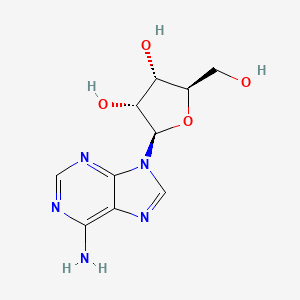
(2R,3R,4S,5R)-2-(6-aminopurin-9-yl)-5-(hydroxymethyl)oxolane-3,4-diol
References
- 1ISO 16128-1:2016 and ISO 16128-2:2017 — Guidelines on technical definitions and criteria for natural and organic cosmetic ingredients and products. ISO, Geneva.
- 2Adenosine. PubChem CID 60961. National Center for Biotechnology Information. pubchem.ncbi.nlm.nih.gov ↗
- 3ADENOSINE. CosIng — European Commission cosmetic ingredient database. ec.europa.eu/cosing ↗
- 4ADENOSINE. CosIng u2014 European Commission database for information on cosmetic substances and ingredients. https://ec.europa.eu/growth/tools-databases/cosing/search?search=ADENOSINE