Why the score varies
This ingredient is made commercially by more than one route, and ISO 16128 scores the feedstock actually used. Without a supplier certificate of origin the value cannot be claimed.
| Route | Feedstock | NOI | Share | Notes |
|---|---|---|---|---|
| corn-glucose fermentation | corn starch/glucose fermented by engineered E. coli | 1.00 | majority of cosmetic-grade supply | |
| petrochemical (acrolein hydration / ethylene oxide hydroformylation) | petroleum-derived acrolein or ethylene oxide | 0.00 | minority, mainly non-cosmetic industrial grades |
How we scored it
Where it comes from
Most cosmetic-grade 1,3-propanediol is fermented from corn glucose by engineered E. coli (e.g., Zemea/Susterra), now the dominant route for personal-care grades. An older petrochemical route hydrates acrolein or hydroformylates ethylene oxide.
1,3-Propanediol can be synthesized via two major commercially significant routes: petrochemical synthesis and bio-fermentation.
The petrochemical route typically involves the hydration of acrolein, which is itself derived from the oxidation of propylene. Propylene is a common petrochemical building block obtained from steam cracking of hydrocarbons or fluid catalytic cracking in refineries. The hydration of acrolein to 1,3-propanediol can be achieved using various catalytic systems, often involving hydrogenation steps. For instance, acrolein can be reacted with synthesis gas (CO + H2) under high pressure and temperature in the presence of specific catalysts, or it can be hydrogenated to allyl alcohol, followed by hydroformylation and hydrogenation.
Alternatively, a significant and growing route is bio-fermentation. This process utilizes renewable feedstocks, primarily glucose derived from the fermentation of corn starch or other plant sugars. Genetically engineered microorganisms, such as specific strains of E. coli or yeast, are employed to convert glucose into 1,3-propanediol through a series of enzymatic reactions. This bioprocess is typically carried out in large fermenters under controlled temperature and pH conditions. Following fermentation, the 1,3-propanediol is recovered and purified from the fermentation broth using techniques like distillation and filtration.
Purification for both routes is critical to achieve cosmetic-grade quality. This typically involves multi-stage distillation to remove impurities, unreacted starting materials, and byproducts. Ion exchange resins and activated carbon treatments may also be employed to ensure high purity and remove trace contaminants, resulting in a clear, colorless, and viscous liquid.
In plain English
1,3-Propanediol is a versatile ingredient used in cosmetics for its ability to attract and retain moisture, making it an excellent humectant. It helps to keep the skin hydrated and feeling soft. It also acts as a solvent, helping to dissolve other ingredients in a formulation, and can improve the texture and spreadability of products like lotions and serums.
This ingredient can be produced through two main pathways. One pathway starts from petroleum-based chemicals, similar to how many plastics are made. The other pathway uses a more sustainable approach, relying on the fermentation of plant-derived sugars, such as those from corn. Both methods result in a high-purity ingredient suitable for cosmetic use, but the origin of the starting materials differs significantly.
CosIng definition: Propanediol is the organic compound that conforms to the formula
Natural alternatives with the same function
A stabilised, water-soluble form of vitamin C used as an antioxidant and humectant in skincare. It is made…
Acer Saccharum Sap 100% natural originSap tapped straight from sugar maple trees, used as a humectant to help skin hold onto moisture. It's…
Achillea Millefolium Flower Extract 100% natural originAn extract made from yarrow flowers, a plant long used in traditional herbal preparations. Used to help condition…
Acorus Gramineus Extract 100% natural originAn extract from the whole grass-leaved sweet flag plant, used to help skin retain moisture. It is a…
Acronychia Acidula Fruit Extract 100% natural originAn extract of lemon aspen, an Australian native fruit, used to condition skin and hair and help hold…
Adansonia Grandidieri Seed Oil 100% natural originA nourishing oil pressed from the seeds of the Madagascar baobab tree. It's used to condition skin and…
Structure
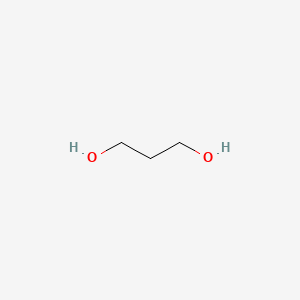
propane-1,3-diol
References
- 1ISO 16128-1:2016 and ISO 16128-2:2017 — Guidelines on technical definitions and criteria for natural and organic cosmetic ingredients and products. ISO, Geneva.
- 21,3-Propanediol. PubChem CID 10442. National Center for Biotechnology Information. pubchem.ncbi.nlm.nih.gov ↗
- 31,3-PROPANEDIOL. CosIng — European Commission cosmetic ingredient database. ec.europa.eu/cosing ↗
- 4PROPANEDIOL. CosIng u2014 European Commission database for information on cosmetic substances and ingredients. https://ec.europa.eu/growth/tools-databases/cosing/search?search=PROPANEDIOL