Why the score varies
This ingredient is made commercially by more than one route, and ISO 16128 scores the feedstock actually used. Without a supplier certificate of origin the value cannot be claimed.
| Route | Feedstock | NOI | Share | Notes |
|---|---|---|---|---|
| petrochemical butyric acid + fermentation ethanol | oxo-synthesis butyric acid; sugar or grain fermentation ethanol | 0.39 | ~70% | only the 45.06 Da ethoxy fragment is natural origin |
| fermentation butyric acid + fermentation ethanol | natural fermentation of both halves | 1.00 | ~30% |
How we scored it
How it’s made
Where it comes from
Made by esterifying butyric acid with ethanol. Ethanol is fermented from sugar or grain. Butyric acid is produced either by fermentation for natural-labelled material or by petrochemical oxo synthesis for cheaper grades, and the synthetic acid supplies most of the volume.
In plain English
A fruity, pineapple-like flavor and fragrance ingredient. It can be made from fermentation-derived butyric acid and ethanol, or produced synthetically; synthetic production is more common commercially.
Natural alternatives with the same function
Dihydromyrcenol, a fresh, citrus-lime, slightly metallic fragrance ingredient used in many perfumes and cleaning products. It is made…
Abies Alba Cone Extract 100% natural originAn extract from fir tree cones that adds a fresh, forest-like scent to cosmetic products.
Abies Alba Leaf Oil 100% natural originEssential oil distilled from fir tree needles, used for its fresh, woody fragrance. A whole natural essential oil.
Abies Alba Needle Extract 100% natural originA fir-needle extract used mainly to add a fresh, woody scent to cosmetics. It comes from extracting the…
Abies Alba Needle Oil 100% natural originAn essential oil steam-distilled from the needles of the European silver fir. It gives fragrances and toiletries a…
Abies Balsamea Needle Extract 100% natural originA balsam fir needle extract used as a fragrance ingredient in cosmetics, made by extracting the needles of…
Structure
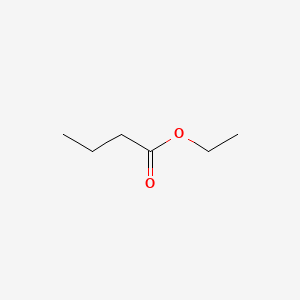
ethyl butanoate
References
- 1ISO 16128-1:2016 and ISO 16128-2:2017 — Guidelines on technical definitions and criteria for natural and organic cosmetic ingredients and products. ISO, Geneva.
- 2Ethyl Butyrate. PubChem CID 7762. National Center for Biotechnology Information. pubchem.ncbi.nlm.nih.gov ↗
- 3ETHYL BUTYRATE. CosIng — European Commission cosmetic ingredient database. ec.europa.eu/cosing ↗
- 4ETHYL BUTYRATE. CosIng u2014 European Commission database for information on cosmetic substances and ingredients. https://ec.europa.eu/growth/tools-databases/cosing/search?search=ETHYL%20BUTYRATE