How we scored it
C10H20O 156.3 Da: all ten carbons come from pine turpentine pinane or myrcene (b); hydration adds water only. 156.3 / 156.3 = 1.00.
What counts. ISO 16128-2 scores the atoms that remain in the final ingredient. Reagents, solvents, catalysts and protecting groups used during manufacture leave no mass behind and are not counted.
Where it comes from
Dominant route is pyrolysis of cis-pinane (from turpentine alpha-pinene) to dihydromyrcene, then acid-catalysed hydration to the tertiary alcohol. Hydrogenation and hydration of myrcene is a lesser pine-based variant.
In plain English
Dihydromyrcenol, a fresh, citrus-lime, slightly metallic fragrance ingredient used in many perfumes and cleaning products. It is made from terpenes of pine turpentine (pinane or myrcene) by hydrogenation and acid hydration.
CosIng definition: Dihydromyrcenol
Structure
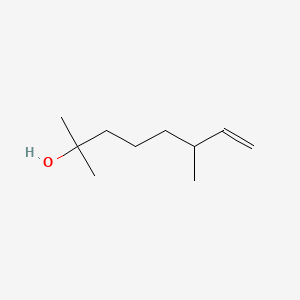
2,6-dimethyloct-7-en-2-ol
References
- 1ISO 16128-1:2016 and ISO 16128-2:2017 — Guidelines on technical definitions and criteria for natural and organic cosmetic ingredients and products. ISO, Geneva.
- 22,6-Dimethyl-7-Octen-2-Ol. PubChem CID 29096. National Center for Biotechnology Information. pubchem.ncbi.nlm.nih.gov ↗
- 32,6-DIMETHYL-7-OCTEN-2-OL. CosIng — European Commission cosmetic ingredient database. ec.europa.eu/cosing ↗
- 42,6-DIMETHYL-7-OCTEN-2-OL. CosIng u2014 European Commission database for information on cosmetic substances and ingredients. https://ec.europa.eu/growth/tools-databases/cosing/search?search=2%2C6-DIMETHYL-7-OCTEN-2-OL