Why the score varies
This ingredient is made commercially by more than one route, and ISO 16128 scores the feedstock actually used. Without a supplier certificate of origin the value cannot be claimed.
| Route | Feedstock | NOI | Share | Notes |
|---|---|---|---|---|
| Petrochemical DBE byproduct | Cyclohexane/benzene via the adipic-acid (nylon-6,6) co-product stream, esterified with methanol | 0.00 | majority of cosmetic solvent-grade supply | |
| Bio-succinic acid fermentation | Fermented glucose/sucrose succinic acid esterified with petrochemical methanol | 0.79 | minority, growing |
How we scored it
Where it comes from
The petrochemical DBE (dibasic ester) route dominates commercial supply of this cosmetic solvent, as a byproduct of nylon-intermediate (adipic acid) manufacture. A fermentation-based bio-succinic-acid route, esterified with petrochemical methanol, is commercially available but is not the typical source for this ingredient.
In plain English
A solvent and fragrance ingredient that also helps condition skin, used to dissolve other ingredients in formulations. Typically produced from petrochemical feedstocks as part of a byproduct stream from nylon manufacturing, though a plant-fermentation route also exists.
Natural alternatives with the same function
A soft wax from mimosa flowers used to condition skin and add emollience. It is derived directly from…
Acrocomia Aculeata Seed Butter 100% natural originA solid plant fat obtained from the seeds of the macauba palm, a South American tree, used to…
Actinidia Chinensis Fruit Extract 100% natural originAn extract made from kiwi fruit, used in cosmetics as a skin-conditioning and softening ingredient. Comes directly from…
Actinidia Chinensis Seed Oil 100% natural originA plant oil pressed from kiwi seeds, used to soften and condition skin. It's a natural vegetable oil…
Adansonia Digitata Fruit Extract 100% natural originAn extract of baobab fruit, from the African baobab tree. Used as an emollient to soften and smooth…
Adansonia Digitata Oil 100% natural originA rich vegetable oil pressed from the baobab tree's fruit pulp and leaves. Used to soften and condition…
Structure
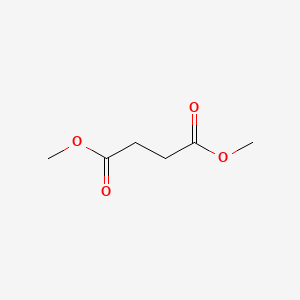
dimethyl butanedioate
References
- 1ISO 16128-1:2016 and ISO 16128-2:2017 — Guidelines on technical definitions and criteria for natural and organic cosmetic ingredients and products. ISO, Geneva.
- 2Dimethyl Succinate. PubChem CID 7820. National Center for Biotechnology Information. pubchem.ncbi.nlm.nih.gov ↗
- 3DIMETHYL SUCCINATE. CosIng — European Commission cosmetic ingredient database. ec.europa.eu/cosing ↗
- 4DIMETHYL SUCCINATE. CosIng u2014 European Commission database for information on cosmetic substances and ingredients. https://ec.europa.eu/growth/tools-databases/cosing/search?search=DIMETHYL%20SUCCINATE