Why the score varies
This ingredient is made commercially by more than one route, and ISO 16128 scores the feedstock actually used. Without a supplier certificate of origin the value cannot be claimed.
| Route | Feedstock | NOI | Share | Notes |
|---|---|---|---|---|
| castor-derived heptanol + petrochemical succinic acid | castor oil pyrolysis heptanal/heptanol; maleic anhydride succinic acid | 0.63 | ~40%, commonest combination | only the two heptyl chains are natural origin |
| castor-derived heptanol + fermentation succinic acid | castor oil heptanol; bio-based succinic acid | 1.00 | ~20%, growing | |
| petrochemical oxo heptanol + petrochemical succinic acid | oxo-process heptanol; maleic anhydride succinic acid | 0.00 | ~30% | |
| petrochemical oxo heptanol + fermentation succinic acid | oxo-process heptanol; bio-based succinic acid | 0.37 | ~10% | only the succinate core is natural origin |
How we scored it
Where it comes from
Heptanol comes either from hydrogenating heptanal made by castor oil pyrolysis, or from petrochemical oxo synthesis on short olefins. Succinic acid comes either from glucose fermentation or from hydrogenating maleic anhydride, which is still the larger share of supply.
In plain English
A skin-conditioning emollient ester made from succinic acid and a synthetic seven-carbon alcohol. Succinic acid can come from fermented plant sugars or from petroleum, so the natural content varies by supplier.
CosIng definition: Diheptyl Succinate is the organic compound
Natural alternatives with the same function
A soft wax from mimosa flowers used to condition skin and add emollience. It is derived directly from…
Acrocomia Aculeata Seed Butter 100% natural originA solid plant fat obtained from the seeds of the macauba palm, a South American tree, used to…
Actinidia Chinensis Fruit Extract 100% natural originAn extract made from kiwi fruit, used in cosmetics as a skin-conditioning and softening ingredient. Comes directly from…
Actinidia Chinensis Seed Oil 100% natural originA plant oil pressed from kiwi seeds, used to soften and condition skin. It's a natural vegetable oil…
Adansonia Digitata Fruit Extract 100% natural originAn extract of baobab fruit, from the African baobab tree. Used as an emollient to soften and smooth…
Adansonia Digitata Oil 100% natural originA rich vegetable oil pressed from the baobab tree's fruit pulp and leaves. Used to soften and condition…
Structure
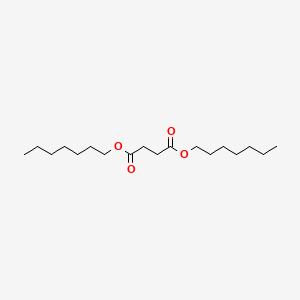
diheptyl butanedioate
References
- 1ISO 16128-1:2016 and ISO 16128-2:2017 — Guidelines on technical definitions and criteria for natural and organic cosmetic ingredients and products. ISO, Geneva.
- 2Diheptyl Succinate. PubChem CID 85155. National Center for Biotechnology Information. pubchem.ncbi.nlm.nih.gov ↗
- 3DIHEPTYL SUCCINATE. CosIng — European Commission cosmetic ingredient database. ec.europa.eu/cosing ↗
- 4DIHEPTYL SUCCINATE. CosIng u2014 European Commission database for information on cosmetic substances and ingredients. https://ec.europa.eu/growth/tools-databases/cosing/search?search=DIHEPTYL%20SUCCINATE