Why the score varies
This ingredient is made commercially by more than one route, and ISO 16128 scores the feedstock actually used. Without a supplier certificate of origin the value cannot be claimed.
| Route | Feedstock | NOI | Share | Notes |
|---|---|---|---|---|
| Synthetic from guaiacol | petrochemical guaiacol (from catechol) condensed with glyoxylic acid, then oxidised and decarboxylated | 0.00 | ~85% | |
| From wood lignin | lignosulfonates from wood pulping, oxidised | 1.00 | roughly a tenth | |
| Natural vanillin | vanilla beans, or fermentation of ferulic acid or clove-oil eugenol | 1.00 | a few per cent |
How we scored it
How it’s made
Where it comes from
About 85% of world vanillin is synthesised from petrochemical guaiacol and glyoxylic acid. Roughly a tenth is made by oxidising lignin from wood pulping, and a small natural stream comes from vanilla beans or from fermenting ferulic acid or eugenol; all of those count as natural origin.
In plain English
A sweet, vanilla-scented flavour and fragrance compound. Most of it is made from petrochemicals, but vanillin made from wood lignin, by fermentation or from vanilla beans is natural origin, so its score depends on the supplier.
Natural alternatives with the same function
Dihydromyrcenol, a fresh, citrus-lime, slightly metallic fragrance ingredient used in many perfumes and cleaning products. It is made…
4-Terpineol 100% natural originA woody, peppery-smelling terpene alcohol and the main fragrant component of tea tree oil. It is used for…
Abies Alba Leaf Oil 100% natural originEssential oil distilled from fir tree needles, used for its fresh, woody fragrance. A whole natural essential oil.
Abies Balsamea Resin 100% natural originA sticky resin tapped from balsam fir trees, used for its piney scent and to form a thin…
Abies Sachalinensis Leaf Oil 100% natural originAn essential oil steam-distilled from Sakhalin fir needles, giving a fresh, woody fragrance to cosmetics and perfumes. It…
Abies Sibirica Oil 100% natural originA fresh, piney fragrance oil steam-distilled from Siberian fir needles and branches. It comes directly from the tree…
Structure
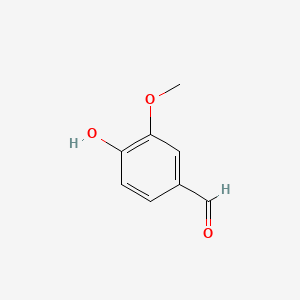
4-hydroxy-3-methoxybenzaldehyde
References
- 1ISO 16128-1:2016 and ISO 16128-2:2017 — Guidelines on technical definitions and criteria for natural and organic cosmetic ingredients and products. ISO, Geneva.
- 2Vanillin. PubChem CID 1183. National Center for Biotechnology Information. pubchem.ncbi.nlm.nih.gov ↗
- 3VANILLIN. CosIng — European Commission cosmetic ingredient database. ec.europa.eu/cosing ↗
- 4VANILLIN. CosIng u2014 European Commission database for information on cosmetic substances and ingredients. https://ec.europa.eu/growth/tools-databases/cosing/search?search=VANILLIN