Why the score varies
This ingredient is made commercially by more than one route, and ISO 16128 scores the feedstock actually used. Without a supplier certificate of origin the value cannot be claimed.
| Route | Feedstock | NOI | Share | Notes |
|---|---|---|---|---|
| Olive extraction/fermentation | olive mill wastewater, olive by-products | 1.00 | significant in 'natural' cosmetic grade | |
| Synthetic from phenol | petrochemical phenol + ethylene oxide | 0.00 | significant in bulk/commodity grade |
How we scored it
Where it comes from
Natural-grade tyrosol is recovered from olive mill wastewater or produced by yeast fermentation; synthetic tyrosol is made from petrochemical phenol. Cosmetic suppliers market both, so the dominant commercial route cannot be determined with confidence.
In plain English
A natural antioxidant found in olives and olive oil byproducts; also sold as a synthetic version made from petroleum-derived phenol, so its origin depends on the supplier.
CosIng definition: Tyrosol is the organic compound that conforms to the formula:
Natural alternatives with the same function
A stabilised, water-soluble form of vitamin C used as an antioxidant and humectant in skincare. It is made…
Acacia Catechu Wood Extract 100% natural originAn extract of the heartwood of the black catechu tree, rich in plant polyphenols such as catechin. It…
Acer Palmatum Leaf Extract 100% natural originA plant extract from Japanese maple leaves, valued as an antioxidant. It's produced by simple extraction from the…
Achillea Millefolium Flower Extract 100% natural originAn extract made from yarrow flowers, a plant long used in traditional herbal preparations. Used to help condition…
Adenosine 100% natural originAdenosine is a naturally occurring compound found in all living cells, playing a vital role in energy transfer…
Aesculus Hippocastanum Extract 100% natural originAn extract from the horse chestnut tree, used to soothe and protect skin and tighten its surface feel.…
Structure
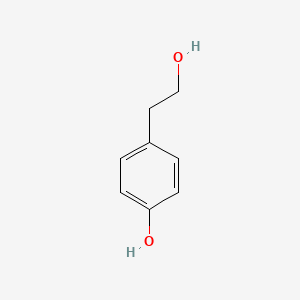
4-(2-hydroxyethyl)phenol
References
- 1ISO 16128-1:2016 and ISO 16128-2:2017 — Guidelines on technical definitions and criteria for natural and organic cosmetic ingredients and products. ISO, Geneva.
- 2Tyrosol. PubChem CID 10393. National Center for Biotechnology Information. pubchem.ncbi.nlm.nih.gov ↗
- 3TYROSOL. CosIng — European Commission cosmetic ingredient database. ec.europa.eu/cosing ↗
- 4TYROSOL. CosIng u2014 European Commission database for information on cosmetic substances and ingredients. https://ec.europa.eu/growth/tools-databases/cosing/search?search=TYROSOL