Why the score varies
This ingredient is made commercially by more than one route, and ISO 16128 scores the feedstock actually used. Without a supplier certificate of origin the value cannot be claimed.
| Route | Feedstock | NOI | Share | Notes |
|---|---|---|---|---|
| Tartaric acid pyrolysis / glucose fermentation | tartaric acid (grape/wine byproduct) or fermentation glucose | 1.00 | unclear | |
| Petrochemical synthesis | acetaldehyde/carbon monoxide or propylene glycol oxidation | 0.00 | unclear |
How we scored it
Where it comes from
Historically made by dry distillation of tartaric acid, a winemaking byproduct (natural route); also produced synthetically from petrochemical acetaldehyde or propylene glycol, and increasingly by glucose fermentation. Market share between routes is unclear.
In plain English
A small acid related to lactic acid, used here as a minor fragrance/processing ingredient. It can be made from natural tartaric acid or plant sugars, or synthesized from petrochemical feedstocks, depending on the supplier.
Natural alternatives with the same function
Dihydromyrcenol, a fresh, citrus-lime, slightly metallic fragrance ingredient used in many perfumes and cleaning products. It is made…
4-Terpineol 100% natural originA woody, peppery-smelling terpene alcohol and the main fragrant component of tea tree oil. It is used for…
Abies Alba Leaf Oil 100% natural originEssential oil distilled from fir tree needles, used for its fresh, woody fragrance. A whole natural essential oil.
Abies Balsamea Resin 100% natural originA sticky resin tapped from balsam fir trees, used for its piney scent and to form a thin…
Abies Sachalinensis Leaf Oil 100% natural originAn essential oil steam-distilled from Sakhalin fir needles, giving a fresh, woody fragrance to cosmetics and perfumes. It…
Abies Sibirica Oil 100% natural originA fresh, piney fragrance oil steam-distilled from Siberian fir needles and branches. It comes directly from the tree…
Structure
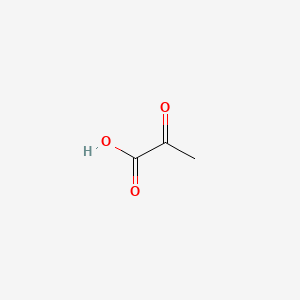
2-oxopropanoic acid
References
- 1ISO 16128-1:2016 and ISO 16128-2:2017 — Guidelines on technical definitions and criteria for natural and organic cosmetic ingredients and products. ISO, Geneva.
- 2Pyruvic Acid. PubChem CID 1060. National Center for Biotechnology Information. pubchem.ncbi.nlm.nih.gov ↗
- 3PYRUVIC ACID. CosIng — European Commission cosmetic ingredient database. ec.europa.eu/cosing ↗
- 4PYRUVIC ACID. CosIng u2014 European Commission database for information on cosmetic substances and ingredients. https://ec.europa.eu/growth/tools-databases/cosing/search?search=PYRUVIC%20ACID