Why the score varies
This ingredient is made commercially by more than one route, and ISO 16128 scores the feedstock actually used. Without a supplier certificate of origin the value cannot be claimed.
| Route | Feedstock | NOI | Share | Notes |
|---|---|---|---|---|
| Synthetic via methylheptenone | petrochemical methylheptenone (acetone and acetylene, or isobutylene and formaldehyde) | 0.00 | ~75% | |
| From pine α-pinene | α-pinene from pine turpentine → pinane → pinanol → linalool | 1.00 | ~10% | |
| Natural isolation | essential oil distillation (coriander, rosewood, ho wood, lavender) | 1.00 | ~15% |
How we scored it
How it’s made
Where it comes from
Most commercial linalool is synthesised from petrochemical methylheptenone (made from acetone and acetylene, or isobutylene and formaldehyde). Linalool made from α-pinene in pine turpentine, and linalool distilled from rosewood, ho wood, lavender or coriander oil, are natural origin.
In plain English
A floral-smelling fragrance ingredient used to scent cosmetics. Most is built from petrochemicals, but linalool distilled from lavender, coriander or rosewood oil, or made from pine terpenes, is natural origin.
Natural alternatives with the same function
An antiperspirant and astringent mineral salt of aluminum and bromine, chemically similar to the more common aluminum chlorohydrate.…
Aluminum Calcium Copper Sodium Borosilicate 100% natural originA fine glass powder containing copper, used as a deodorant ingredient in some products. It is made by…
Aluminum Chloride 100% natural originA mineral salt used in antiperspirants and deodorants to reduce sweat and odor, and as an astringent. It's…
Aluminum Chlorohydrate 100% natural originA mineral aluminium salt used in antiperspirants to reduce underarm wetness by temporarily blocking sweat ducts; refined from…
Aluminum Dichlorohydrate 100% natural originThe active ingredient in many antiperspirants, reducing underarm wetness. It's a simple mineral salt of aluminum, chloride and…
Aluminum Lactate 100% natural originAluminum lactate is a mineral salt of lactic acid, used in deodorants for its astringent, sweat-reducing properties and…
Structure
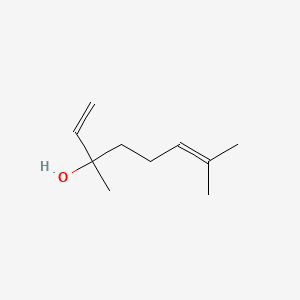
3,7-dimethylocta-1,6-dien-3-ol
References
- 1ISO 16128-1:2016 and ISO 16128-2:2017 — Guidelines on technical definitions and criteria for natural and organic cosmetic ingredients and products. ISO, Geneva.
- 2Linalool. PubChem CID 6549. National Center for Biotechnology Information. pubchem.ncbi.nlm.nih.gov ↗
- 3LINALOOL. CosIng — European Commission cosmetic ingredient database. ec.europa.eu/cosing ↗
- 4LINALOOL. CosIng u2014 European Commission database for information on cosmetic substances and ingredients. https://ec.europa.eu/growth/tools-databases/cosing/search?search=LINALOOL