Why the score varies
This ingredient is made commercially by more than one route, and ISO 16128 scores the feedstock actually used. Without a supplier certificate of origin the value cannot be claimed.
| Route | Feedstock | NOI | Share | Notes |
|---|---|---|---|---|
| Henna leaf extraction | Lawsonia inermis leaves | 1.00 | likely dominant for cosmetic/hair-dye use, exact % uncertain | |
| Petrochemical synthesis | naphthalene / 1,4-naphthoquinone oxidation | 0.00 | minority for cosmetic use, exact % uncertain |
How we scored it
Where it comes from
Most cosmetic hair-dye use relies on extracting henna leaves (Lawsonia inermis), the natural route associated with 'natural' hair dyes; a petrochemical naphthalene-oxidation route can also supply pure lawsone for dye manufacture. Henna extraction is treated as the dominant route for this cosmetic use.
In plain English
A reddish-orange dye naturally found in henna leaves, used to colour hair. It can come from extracting henna or from industrial chemical synthesis, depending on the supplier.
Natural alternatives with the same function
A powder made by drying and grinding sugar beet root. Used as a natural colorant for hair dye…
Bismuth Citrate 100% natural originA salt formed from bismuth metal and citric acid, a natural fermentation-derived fruit acid, used to buffer, chelate…
Dihydroxyacetone 100% natural originThe active self-tanning ingredient that reacts with skin's surface proteins to produce a temporary bronze colour; made by…
Epicatechin 100% natural originAn antioxidant compound naturally found in tea and cocoa, used in skin, hair and oral care. It's extracted…
Lawsonia Inermis Extract 100% natural originA plant extract from the henna shrub, used to condition hair and skin and add a reddish tint.…
Pyrogallol 100% natural originA hair-dye ingredient traditionally made by heating gallic acid, itself extracted from plant tannins in gallnuts, until it…
Structure
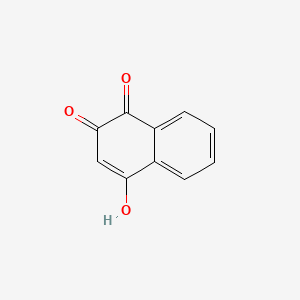
4-hydroxynaphthalene-1,2-dione
References
- 1ISO 16128-1:2016 and ISO 16128-2:2017 — Guidelines on technical definitions and criteria for natural and organic cosmetic ingredients and products. ISO, Geneva.
- 2Lawsone. PubChem CID 6755. National Center for Biotechnology Information. pubchem.ncbi.nlm.nih.gov ↗
- 3LAWSONE. CosIng — European Commission cosmetic ingredient database. ec.europa.eu/cosing ↗
- 4LAWSONE. CosIng u2014 European Commission database for information on cosmetic substances and ingredients. https://ec.europa.eu/growth/tools-databases/cosing/search?search=LAWSONE