How we scored it
Where it comes from
Solvent extraction and purification of babchi seed. Confirm extraction origin with the supplier if a synthetic grade is suspected.
Bakuchiol is a meroterpene phenol that is naturally occurring in plants. The primary method of obtaining bakuchiol for cosmetic use is through extraction from the seeds of Psoralea corylifolia.
The extraction process typically involves solvent extraction, where the seeds are ground and then treated with a solvent (such as hexane, ethanol, or supercritical CO2) to dissolve the bakuchiol and other lipophilic compounds. Following extraction, the solvent is evaporated, leaving a crude extract.
Further purification steps are then employed to isolate bakuchiol to the desired purity for cosmetic applications. These steps can include techniques like chromatography (e.g., column chromatography) and crystallization. The goal is to remove unwanted co-extracted compounds and achieve a high concentration of bakuchiol, often standardized to a specific percentage (e.g., 99%).
While extraction from Psoralea corylifolia is the dominant commercial route, research has explored alternative synthesis routes, including semi-synthesis from other natural precursors or total synthesis. However, these are not currently significant in the commercial cosmetic supply chain.
In plain English
Bakuchiol is a natural compound found in the seeds of the Babchi plant, which has been used in traditional medicine for centuries. It's often referred to as a 'natural alternative' to retinol, a popular anti-aging ingredient derived from vitamin A.
In skincare, bakuchiol is valued for its ability to help improve the appearance of fine lines and wrinkles, enhance skin firmness, and reduce the look of hyperpigmentation. It also possesses antioxidant properties, which help protect the skin from environmental damage. Unlike retinol, bakuchiol is generally considered to be gentler on the skin, making it suitable for those with sensitive skin who may experience irritation from retinol.
CosIng definition: Bakuchiol is the organic compound that conforms to the formula:
Structure
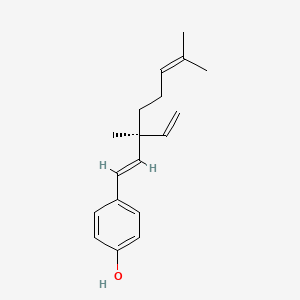
4-[(1E,3S)-3-ethenyl-3,7-dimethylocta-1,6-dienyl]phenol
References
- 1ISO 16128-1:2016 and ISO 16128-2:2017 — Guidelines on technical definitions and criteria for natural and organic cosmetic ingredients and products. ISO, Geneva.
- 2Bakuchiol. PubChem CID 5468522. National Center for Biotechnology Information. pubchem.ncbi.nlm.nih.gov ↗
- 3BAKUCHIOL. CosIng — European Commission cosmetic ingredient database. ec.europa.eu/cosing ↗
- 4BAKUCHIOL. CosIng u2014 European Commission database for information on cosmetic substances and ingredients. https://ec.europa.eu/growth/tools-databases/cosing/search?search=BAKUCHIOL