How we scored it
How it’s made
Where it comes from
Dominant feedstock is natural gas, steam-reformed and combined with nitrogen (Haber-Bosch) to give ammonia, which reacts with CO2 (Bosch-Meiser process) to form urea. No natural-origin route is used commercially.
The industrial synthesis of urea is a well-established process, primarily carried out in two main steps: the synthesis of ammonium carbamate and its subsequent dehydration to urea.
First, liquid ammonia and gaseous carbon dioxide are reacted under high pressure (typically 140-250 bar) and elevated temperature (around 180-200 °C) to form ammonium carbamate. This reaction is exothermic and is represented by the equation: 2 NH3 (l) + CO2 (g) <=> NH2COONH4 (l).
Next, the ammonium carbamate is dehydrated to form urea and water. This step requires higher temperatures (around 190-210 °C) and is carried out at slightly lower pressures (around 150-250 bar) in a reactor. The reaction is endothermic and is represented by the equation: NH2COONH4 (l) <=> CO(NH2)2 (l) + H2O (l).
The crude urea solution is then subjected to a series of purification steps. This typically involves stripping unreacted ammonia and carbon dioxide, followed by evaporation to concentrate the urea solution. Further purification may include crystallization, filtration, and drying to obtain solid urea, often in prill or granular form, meeting specific purity standards for cosmetic and agricultural applications.
In plain English
Urea is a common ingredient found in many skincare products, especially those designed for dry or rough skin. It's a naturally occurring compound in the human body, playing a vital role in skin's hydration and its natural moisturizing factor (NMF). When used in cosmetics, it acts as a powerful humectant, meaning it attracts and holds water, helping to keep the skin hydrated and soft.
Industrially, urea is synthesized through a chemical process that combines ammonia and carbon dioxide. While urea itself is a natural component of our bodies, the urea used in cosmetics is typically produced in large chemical plants. The raw materials for this synthesis, ammonia and carbon dioxide, are primarily derived from fossil fuels like natural gas. Therefore, from a sourcing perspective according to ISO 16128, it is considered a petroleum-derived ingredient.
Natural alternatives with the same function
Adenosine is a naturally occurring compound found in all living cells, playing a vital role in energy transfer…
Aloe Barbadensis Leaf Juice 100% natural originAloe Barbadensis Leaf Juice, commonly known as aloe vera, comes directly from the thick, fleshy leaves of the…
Argan Oil 100% natural originArgan oil is a luxurious oil derived from the kernels of the Argan tree, which is primarily found…
Ascorbic Acid 100% natural originAscorbic acid is the scientific name for Vitamin C, a well-known antioxidant that plays a crucial role in…
Ascorbyl Glucoside 100% natural originAscorbyl Glucoside is a stabilized form of Vitamin C, a popular ingredient known for its antioxidant and skin-brightening…
Azelaic Acid 100% natural originAzelaic acid is a dicarboxylic acid that occurs naturally in wheat, rye, and barley. In cosmetics, it's often…
Structure
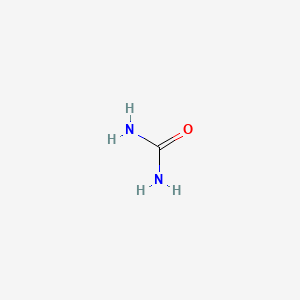
urea
References
- 1ISO 16128-1:2016 and ISO 16128-2:2017 — Guidelines on technical definitions and criteria for natural and organic cosmetic ingredients and products. ISO, Geneva.
- 2Urea. PubChem CID 1176. National Center for Biotechnology Information. pubchem.ncbi.nlm.nih.gov ↗
- 3UREA. CosIng — European Commission cosmetic ingredient database. ec.europa.eu/cosing ↗
- 4UREA. CosIng u2014 European Commission database for information on cosmetic substances and ingredients. https://ec.europa.eu/growth/tools-databases/cosing/search?search=UREA