How we scored it
How it’s made
Where it comes from
Salicylic acid is manufactured industrially by carboxylating petrochemical-derived phenol (Kolbe-Schmitt synthesis). Trace natural sources such as willow bark and wintergreen exist but supply none of the commodity cosmetic-grade material.
The most common industrial synthesis of salicylic acid is the Kolbe-Schmitt reaction. This process begins with phenol, which is first treated with a strong base, typically sodium hydroxide, to form sodium phenoxide. This sodium phenoxide is then reacted with carbon dioxide under elevated temperature (around 125°C) and pressure (around 100 atm).
The reaction mechanism involves the electrophilic attack of carbon dioxide on the activated phenoxide ring, preferentially at the ortho position due to the directing effect of the phenoxide oxygen. This forms sodium salicylate.
Following the carboxylation step, the sodium salicylate is acidified, usually with sulfuric acid, to liberate free salicylic acid. The crude salicylic acid is then purified through methods such as recrystallization, often from water or organic solvents, to achieve the desired purity for cosmetic and pharmaceutical applications. The overall process yields salicylic acid with a high degree of purity, free from significant biological contaminants.
In plain English
Salicylic acid is a well-known ingredient in skincare, often found in products designed to treat acne and improve skin texture. It's a type of beta-hydroxy acid (BHA) that works by exfoliating the skin. This means it helps to loosen and shed dead skin cells from the surface and within the pores.
This exfoliation action is key to its benefits. By clearing out pores, it can help prevent breakouts and reduce the appearance of blackheads and whiteheads. It also has anti-inflammatory properties, which can help calm redness and irritation associated with acne. Because it can penetrate oil, it's particularly effective for oily and acne-prone skin types.
CosIng definition: Salicylic Acid is the aromatic acid that conforms to the formula:
Natural alternatives with the same function
Adenosine is a naturally occurring compound found in all living cells, playing a vital role in energy transfer…
Aloe Barbadensis Leaf Juice 100% natural originAloe Barbadensis Leaf Juice, commonly known as aloe vera, comes directly from the thick, fleshy leaves of the…
Argan Oil 100% natural originArgan oil is a luxurious oil derived from the kernels of the Argan tree, which is primarily found…
Ascorbic Acid 100% natural originAscorbic acid is the scientific name for Vitamin C, a well-known antioxidant that plays a crucial role in…
Ascorbyl Glucoside 100% natural originAscorbyl Glucoside is a stabilized form of Vitamin C, a popular ingredient known for its antioxidant and skin-brightening…
Azelaic Acid 100% natural originAzelaic acid is a dicarboxylic acid that occurs naturally in wheat, rye, and barley. In cosmetics, it's often…
Structure
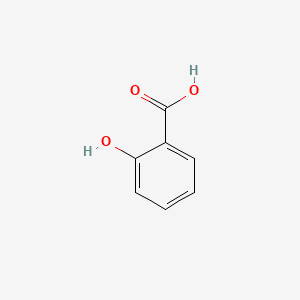
2-hydroxybenzoic acid
References
- 1ISO 16128-1:2016 and ISO 16128-2:2017 — Guidelines on technical definitions and criteria for natural and organic cosmetic ingredients and products. ISO, Geneva.
- 2Salicylic Acid. PubChem CID 338. National Center for Biotechnology Information. pubchem.ncbi.nlm.nih.gov ↗
- 3SALICYLIC ACID. CosIng — European Commission cosmetic ingredient database. ec.europa.eu/cosing ↗
- 4SALICYLIC ACID. CosIng u2014 European Commission database for information on cosmetic substances and ingredients. https://ec.europa.eu/growth/tools-databases/cosing/search?search=SALICYLIC%20ACID