How we scored it
How it’s made
Where it comes from
Dominant commercial route is synthesis from petrochemical 3-methylpyridine (3-picoline) via 3-cyanopyridine hydrolysis. A microbial fermentation route exists but supplies a commercially negligible share.
The industrial synthesis of niacinamide, also known as nicotinamide, commonly begins with the oxidation of 3-methylpyridine (beta-picoline) to nicotinic acid. Beta-picoline itself is derived from petrochemical sources, often through reactions involving acetaldehyde and ammonia. The oxidation step can be carried out using various methods, including catalytic vapor-phase oxidation with air or oxygen over metal oxide catalysts (e.g., vanadium oxides) at elevated temperatures (typically 300-450°C). Alternatively, liquid-phase oxidation using strong oxidizing agents can be employed.
Following the formation of nicotinic acid, the next crucial step is the amidation to produce niacinamide. This is commonly achieved by reacting nicotinic acid with ammonia. A widely used industrial process involves the ammonolysis of nicotinic acid esters, or directly reacting nicotinic acid with ammonia at high temperatures and pressures, often in the presence of a catalyst. Another significant route is the catalytic ammoxidation of 3-methylpyridine, where beta-picoline is reacted with ammonia and oxygen in a single step to directly yield niacinamide. This process also occurs at high temperatures (300-450°C) over heterogeneous catalysts, such as vanadium-titanium oxides.
Regardless of the specific synthesis pathway, the crude niacinamide product requires rigorous purification to meet cosmetic and pharmaceutical standards. Purification typically involves steps such as crystallization, filtration, washing, and drying. Recrystallization from suitable solvents (like water or ethanol) is a common method to remove impurities and obtain high-purity niacinamide crystals. The final product is a white, crystalline powder that is highly soluble in water.
In plain English
Niacinamide, also known as Vitamin B3, is a popular ingredient found in many skincare and haircare products. It's a versatile compound that offers a wide range of benefits for the skin, including improving its appearance by reducing the look of pores, uneven skin tone, fine lines, and dullness. It also helps to strengthen the skin's barrier, making it more resilient and better able to retain moisture, which can lead to a smoother and more hydrated complexion.
While niacinamide is a form of Vitamin B3, which is naturally present in foods like meat, fish, and grains, the niacinamide used in cosmetics is typically produced through a chemical synthesis process. This process starts with basic chemical building blocks derived from petroleum, not from plants or other natural sources. Therefore, according to the ISO 16128 standard for natural origin ingredients, cosmetic-grade niacinamide is classified as having zero natural origin content, meaning it's considered a synthetic ingredient.
Natural alternatives with the same function
Adenosine is a naturally occurring compound found in all living cells, playing a vital role in energy transfer…
Aloe Barbadensis Leaf Juice 100% natural originAloe Barbadensis Leaf Juice, commonly known as aloe vera, comes directly from the thick, fleshy leaves of the…
Argan Oil 100% natural originArgan oil is a luxurious oil derived from the kernels of the Argan tree, which is primarily found…
Ascorbic Acid 100% natural originAscorbic acid is the scientific name for Vitamin C, a well-known antioxidant that plays a crucial role in…
Ascorbyl Glucoside 100% natural originAscorbyl Glucoside is a stabilized form of Vitamin C, a popular ingredient known for its antioxidant and skin-brightening…
Azelaic Acid 100% natural originAzelaic acid is a dicarboxylic acid that occurs naturally in wheat, rye, and barley. In cosmetics, it's often…
Structure
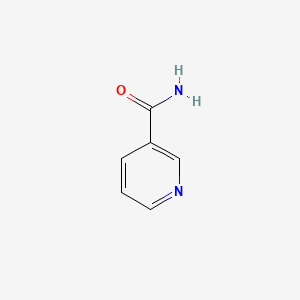
pyridine-3-carboxamide
References
- 1ISO 16128-1:2016 and ISO 16128-2:2017 — Guidelines on technical definitions and criteria for natural and organic cosmetic ingredients and products. ISO, Geneva.
- 2Niacinamide. PubChem CID 936. National Center for Biotechnology Information. pubchem.ncbi.nlm.nih.gov ↗
- 3NIACINAMIDE. CosIng — European Commission cosmetic ingredient database. ec.europa.eu/cosing ↗
- 4NIACINAMIDE. CosIng u2014 European Commission database for information on cosmetic substances and ingredients. https://ec.europa.eu/growth/tools-databases/cosing/search?search=NIACINAMIDE