Why the score varies
This ingredient is made commercially by more than one route, and ISO 16128 scores the feedstock actually used. Without a supplier certificate of origin the value cannot be claimed.
| Route | Feedstock | NOI | Share | Notes |
|---|---|---|---|---|
| Chloroacetic acid hydrolysis or formaldehyde/CO carbonylation | petrochemical chloroacetic acid or formaldehyde | 0.00 | ~80% | |
| Fermentation of cane or beet sugar | fermented plant sugar | 1.00 | ~20% |
How we scored it
How it’s made
Where it comes from
Most cosmetic-grade glycolic acid is synthesised from petrochemical chloroacetic acid or by formaldehyde carbonylation. A smaller, growing supply is produced by fermenting cane or beet sugar for naturals-focused brands.
In plain English
A small acid used here to adjust and buffer a formula's pH. Most commercial supply is synthesised from petrochemical chloroacetic acid or formaldehyde, though some is produced by fermenting plant sugars.
Natural alternatives with the same function
An extract of the bark of Alstonia scholaris, a tropical evergreen tree, made by soaking the bark in…
Aluminum Lactate 100% natural originAluminum lactate is a mineral salt of lactic acid, used in deodorants for its astringent, sweat-reducing properties and…
Babassu Acid 100% natural originA blend of fatty acids from babassu palm seed oil, used to cleanse and help stabilise the texture…
Bismuth Citrate 100% natural originA salt formed from bismuth metal and citric acid, a natural fermentation-derived fruit acid, used to buffer, chelate…
Boric Acid 100% natural originA mild mineral acid mined from natural borate deposits or brine. Used in small amounts to buffer pH,…
Calcium Carbonate 100% natural originA finely ground mineral powder from limestone or chalk. Bulks out powders and pastes, acts as a mild…
Structure
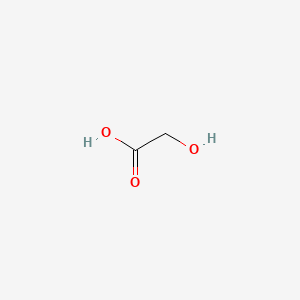
2-hydroxyacetic acid
References
- 1ISO 16128-1:2016 and ISO 16128-2:2017 — Guidelines on technical definitions and criteria for natural and organic cosmetic ingredients and products. ISO, Geneva.
- 2Glycolic Acid. PubChem CID 757. National Center for Biotechnology Information. pubchem.ncbi.nlm.nih.gov ↗
- 3GLYCOLIC ACID. CosIng — European Commission cosmetic ingredient database. ec.europa.eu/cosing ↗
- 4GLYCOLIC ACID. CosIng u2014 European Commission database for information on cosmetic substances and ingredients. https://ec.europa.eu/growth/tools-databases/cosing/search?search=GLYCOLIC%20ACID