Why the score varies
This ingredient is made commercially by more than one route, and ISO 16128 scores the feedstock actually used. Without a supplier certificate of origin the value cannot be claimed.
| Route | Feedstock | NOI | Share | Notes |
|---|---|---|---|---|
| natural extraction | Dunaliella salina algae or palm/carrot oil | 1.00 | preferred in natural-positioned cosmetics; minority of total global volume | |
| synthetic petrochemical | beta-ionone via Wittig/BASF-type synthesis | 0.00 | dominant share of overall global bulk beta-carotene volume |
How we scored it
Where it comes from
CI 75125 (carotene) is produced either by extraction from Dunaliella algae or palm/carrot oil, or by industrial petrochemical synthesis from beta-ionone (BASF/Roche-type Wittig routes). Natural-positioned cosmetics typically specify the extracted route, but synthetic carotene remains widely used industrially.
In plain English
Carotene, an orange plant pigment that can either be extracted from carrots, algae or palm oil, or manufactured synthetically from petrochemical building blocks. Used to add colour or antioxidant properties to cosmetics.
CosIng definition: CI 75125 is classed chemically as a carotenoid colour. It conforms to the formula:
Natural alternatives with the same function
Finely powdered aluminum metal used to add shimmer or color to cosmetics. It comes from refining bauxite ore,…
Aluminum Stearate 100% natural originAn aluminium salt of stearic acid, a fatty acid from vegetable or animal fat. Used to prevent caking,…
Anthocyanins 100% natural originA natural colorant that gives products red, purple or blue tones. It is recovered from grape skins or…
Calcium Ferrite 100% natural originA mineral pigment made of calcium and iron oxide, used as a colourant in cosmetics. It is produced…
Calcium Stearate 100% natural originThe calcium salt of stearic acid, a fatty acid usually from vegetable oils. Used as an anti-caking, thickening…
Caramel 100% natural originA colouring and fragrance ingredient made by heating sugar, sucrose or glucose, until it browns. It comes from…
Structure
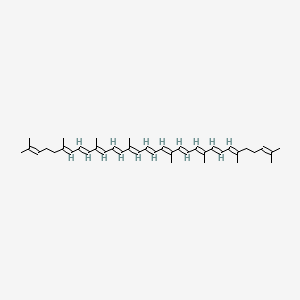
(6E,8E,10E,12E,14E,16E,18E,20E,22E,24E,26E)-2,6,10,14,19,23,27,31-octamethyldotriaconta-2,6,8,10,12,14,16,18,20,22,24,26,30-tridecaene
References
- 1ISO 16128-1:2016 and ISO 16128-2:2017 — Guidelines on technical definitions and criteria for natural and organic cosmetic ingredients and products. ISO, Geneva.
- 2CI 75125. PubChem CID 446925. National Center for Biotechnology Information. pubchem.ncbi.nlm.nih.gov ↗
- 3CI 75125. CosIng — European Commission cosmetic ingredient database. ec.europa.eu/cosing ↗
- 4CI 75125. CosIng u2014 European Commission database for information on cosmetic substances and ingredients. https://ec.europa.eu/growth/tools-databases/cosing/search?search=CI%2075125