How we scored it
How it’s made
Where it comes from
Oleochemical lauryl alcohol sulfated and neutralised. Petrochemical lauryl alcohol from ethylene (Ziegler) is used in some detergent grades; confirm with the supplier.
The industrial synthesis of Sodium Lauryl Sulfate (SLS) typically involves a two-step process starting from petrochemical feedstocks.
The first step is the production of lauryl alcohol (dodecanol). This is commonly achieved through the Ziegler process, where ethylene is oligomerized to form alpha-olefins, which are then hydroformylated (oxo process) to aldehydes and subsequently hydrogenated to alcohols. Alternatively, lauryl alcohol can be produced via the cracking of petroleum waxes or through the Guerbet reaction of shorter-chain alcohols. The dominant commercial route for lauryl alcohol used in SLS production is petrochemical.
The second step involves the sulfation of lauryl alcohol. This is typically carried out by reacting lauryl alcohol with sulfur trioxide (SO3) or chlorosulfonic acid (ClSO3H). The reaction with SO3 is often performed in the gas phase or in a solvent like liquid SO2, using specialized reactors to control the highly exothermic reaction. The resulting intermediate, lauryl hydrogen sulfate, is then neutralized with a base, most commonly sodium hydroxide (NaOH), to form Sodium Lauryl Sulfate.
Purification of the final SLS product involves removing unreacted lauryl alcohol, inorganic salts (like sodium sulfate), and any byproducts. This is usually achieved through crystallization, washing, and drying processes. The final product is typically obtained as a white to cream-colored powder or paste.
In plain English
Sodium Lauryl Sulfate (SLS) is a very common ingredient found in many cleaning products, like shampoos, body washes, and toothpastes. Its main job is to create lather and help lift away dirt and oil from your skin and hair, making it an effective cleansing agent.
While SLS is excellent at cleaning, its origin is important when considering naturalness. The process to make SLS usually starts with chemicals derived from petroleum. These are then chemically transformed through several steps, including creating an alcohol and then adding a sulfate group, before finally being neutralized to form the salt we know as SLS. Because the starting materials and most of the process rely on non-renewable resources, SLS is considered a synthetic ingredient with no natural origin.
CosIng definition: Sodium Lauryl Sulfate is the sodium salt of lauryl sulfate that conforms to the formula
Structure
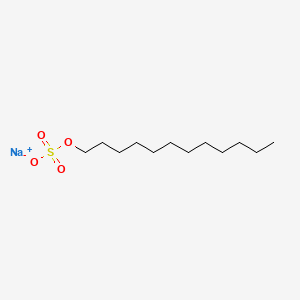
sodium dodecyl sulfate
References
- 1ISO 16128-1:2016 and ISO 16128-2:2017 — Guidelines on technical definitions and criteria for natural and organic cosmetic ingredients and products. ISO, Geneva.
- 2Sodium Lauryl Sulfate. PubChem CID 3423265. National Center for Biotechnology Information. pubchem.ncbi.nlm.nih.gov ↗
- 3SODIUM LAURYL SULFATE. CosIng — European Commission cosmetic ingredient database. ec.europa.eu/cosing ↗
- 4SODIUM LAURYL SULFATE. CosIng u2014 European Commission database for information on cosmetic substances and ingredients. https://ec.europa.eu/growth/tools-databases/cosing/search?search=SODIUM%20LAURYL%20SULFATE