How we scored it
Glycerin (natural) + oleic acid (natural vegetable-oil fatty acid) esterified, losing only water -> 1.0
What counts. ISO 16128-2 scores the atoms that remain in the final ingredient. Reagents, solvents, catalysts and protecting groups used during manufacture leave no mass behind and are not counted.
How it’s made
Where it comes from
Made by esterifying glycerin with oleic acid from vegetable oils such as olive, sunflower or soybean. Both raw materials are plant-derived.
In plain English
An emollient and emulsifier used to soften skin and help blend formulas. It's made from glycerin and oleic acid, a fatty acid found in olive, sunflower and other vegetable oils.
Structure
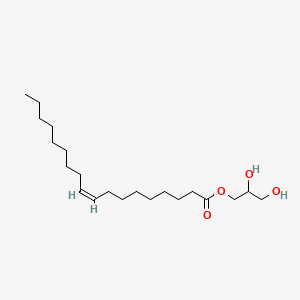
2,3-dihydroxypropyl (Z)-octadec-9-enoate
References
- 1ISO 16128-1:2016 and ISO 16128-2:2017 — Guidelines on technical definitions and criteria for natural and organic cosmetic ingredients and products. ISO, Geneva.
- 2Glyceryl Oleate. PubChem CID 5283468. National Center for Biotechnology Information. pubchem.ncbi.nlm.nih.gov ↗
- 3GLYCERYL OLEATE. CosIng — European Commission cosmetic ingredient database. ec.europa.eu/cosing ↗
- 4GLYCERYL OLEATE. CosIng u2014 European Commission database for information on cosmetic substances and ingredients. https://ec.europa.eu/growth/tools-databases/cosing/search?search=GLYCERYL%20OLEATE