How we scored it
C11H20O2 formed entirely from castor-oil ricinoleic acid via pyrolysis; pyrolysis removes a fragment as heptanal, adds no petrochemical atoms → 1.0.
What counts. ISO 16128-2 scores the atoms that remain in the final ingredient. Reagents, solvents, catalysts and protecting groups used during manufacture leave no mass behind and are not counted.
How it’s made
Where it comes from
Produced almost exclusively by pyrolysis (thermal cracking) of methyl ricinoleate from castor oil. No significant petrochemical route exists commercially.
In plain English
A fatty acid with antimicrobial and conditioning properties, used in anti-dandruff and deodorant products; derived by heat-cracking castor bean oil.
CosIng definition: Undecylenic Acid is the aliphatic acid that conforms generally to the formula:
Structure
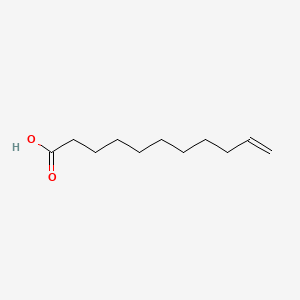
undec-10-enoic acid
References
- 1ISO 16128-1:2016 and ISO 16128-2:2017 — Guidelines on technical definitions and criteria for natural and organic cosmetic ingredients and products. ISO, Geneva.
- 2Undecylenic Acid. PubChem CID 5634. National Center for Biotechnology Information. pubchem.ncbi.nlm.nih.gov ↗
- 3UNDECYLENIC ACID. CosIng — European Commission cosmetic ingredient database. ec.europa.eu/cosing ↗
- 4UNDECYLENIC ACID. CosIng u2014 European Commission database for information on cosmetic substances and ingredients. https://ec.europa.eu/growth/tools-databases/cosing/search?search=UNDECYLENIC%20ACID