How we scored it
Inositol ring (plant-derived) + 6 phosphate groups (mineral) + Na (mineral); all fragments natural; 1.0.
What counts. ISO 16128-2 scores the atoms that remain in the final ingredient. Reagents, solvents, catalysts and protecting groups used during manufacture leave no mass behind and are not counted.
Where it comes from
Extracted from corn steep liquor or rice bran, both rich in naturally occurring phytic acid, and neutralized with sodium. The inositol core is plant-derived and the phosphate/sodium groups are of mineral origin.
In plain English
The sodium salt of phytic acid, a compound found naturally in grains, corn and rice bran, from which it is commercially extracted. Binds trace metal ions to help keep a formula stable.
CosIng definition: Myo-Inositol, hexakis(dihydrogen phosphate), sodium salt
Structure
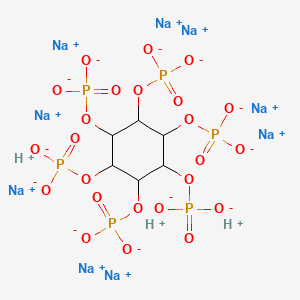
nonasodium;hydron;(2,3,4,5,6-pentaphosphonatooxycyclohexyl) phosphate
References
- 1ISO 16128-1:2016 and ISO 16128-2:2017 — Guidelines on technical definitions and criteria for natural and organic cosmetic ingredients and products. ISO, Geneva.
- 2Sodium Phytate. PubChem CID 23724990. National Center for Biotechnology Information. pubchem.ncbi.nlm.nih.gov ↗
- 3SODIUM PHYTATE. CosIng — European Commission cosmetic ingredient database. ec.europa.eu/cosing ↗
- 4SODIUM PHYTATE. CosIng u2014 European Commission database for information on cosmetic substances and ingredients. https://ec.europa.eu/growth/tools-databases/cosing/search?search=SODIUM%20PHYTATE