Why the score varies
This ingredient is made commercially by more than one route, and ISO 16128 scores the feedstock actually used. Without a supplier certificate of origin the value cannot be claimed.
| Route | Feedstock | NOI | Share | Notes |
|---|---|---|---|---|
| essential-oil isolation | citronella or palmarosa oil, fractionally distilled | 1.00 | ~30% | |
| natural or turpentine-derived geraniol acetylated with petrochemical acetic anhydride | turpentine myrcene or essential-oil geraniol; acetic anhydride | 0.78 | ~45% | only the 43.04 Da acetyl cap is petrochemical |
| petrochemical geraniol acetylated with acetic anhydride | fully petrochemical geraniol; acetic anhydride | 0.00 | ~25% |
How we scored it
How it’s made
Where it comes from
Natural material is fractionally distilled from citronella or palmarosa oil. The rest is made by acetylating geraniol with acetic anhydride; that geraniol comes mostly from turpentine-derived myrcene, and in a smaller share from fully petrochemical routes.
In plain English
A rose- and floral-scented fragrance ingredient. It occurs naturally in citronella and palmarosa oils, but much of the commercial supply is manufactured synthetically from petrochemical feedstocks.
Natural alternatives with the same function
Essential oil distilled from fir tree needles, used for its fresh, woody fragrance. A whole natural essential oil.
Abies Sibirica Oil 100% natural originA fresh, piney fragrance oil steam-distilled from Siberian fir needles and branches. It comes directly from the tree…
Aesculus Hippocastanum Bark Extract 100% natural originA natural extract from horse chestnut bark, used in skincare for its toning and astringent effect on skin.…
Angelica Archangelica Leaf Extract 100% natural originAn extract of the leaves of garden angelica (Angelica archangelica), a plant of the carrot family, made by…
Angelica Archangelica Root Oil 100% natural originAn aromatic essential oil distilled from angelica root, used in perfumery and as a skin tonic. It is…
Aniba Rosaeodora Wood Oil 100% natural originRosewood essential oil, steam-distilled from the wood of the rosewood tree. Used to perfume products with a warm,…
Structure
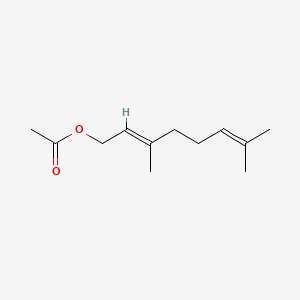
[(2E)-3,7-dimethylocta-2,6-dienyl] acetate
References
- 1ISO 16128-1:2016 and ISO 16128-2:2017 — Guidelines on technical definitions and criteria for natural and organic cosmetic ingredients and products. ISO, Geneva.
- 2Geranyl Acetate. PubChem CID 1549026. National Center for Biotechnology Information. pubchem.ncbi.nlm.nih.gov ↗
- 3GERANYL ACETATE. CosIng — European Commission cosmetic ingredient database. ec.europa.eu/cosing ↗
- 4GERANYL ACETATE. CosIng u2014 European Commission database for information on cosmetic substances and ingredients. https://ec.europa.eu/growth/tools-databases/cosing/search?search=GERANYL%20ACETATE