Why the score varies
This ingredient is made commercially by more than one route, and ISO 16128 scores the feedstock actually used. Without a supplier certificate of origin the value cannot be claimed.
| Route | Feedstock | NOI | Share | Notes |
|---|---|---|---|---|
| From pine myrcene | myrcene cracked from β-pinene in pine turpentine; HCl, acetate, then hydrolysis | 1.00 | major synthetic route | |
| Natural isolation | palmarosa or citronella oil distillation | 1.00 | ~40% | |
| From petrochemical citral | citral built from isobutylene and formaldehyde, hydrogenated | 0.00 | major synthetic route |
How we scored it
How it’s made
Where it comes from
Much geraniol is made from myrcene, cracked from β-pinene in pine turpentine, which counts as natural origin; another large share is hydrogenated from citral built from petrochemical isobutylene. A natural isolate is distilled from palmarosa or citronella oil.
In plain English
A rose-scented fragrance and skin-conditioning ingredient. It is distilled from palmarosa or citronella oil, made from pine terpenes, or made from petrochemicals; only the last is not natural origin.
Natural alternatives with the same function
Essential oil distilled from fir tree needles, used for its fresh, woody fragrance. A whole natural essential oil.
Abies Sibirica Oil 100% natural originA fresh, piney fragrance oil steam-distilled from Siberian fir needles and branches. It comes directly from the tree…
Aesculus Hippocastanum Bark Extract 100% natural originA natural extract from horse chestnut bark, used in skincare for its toning and astringent effect on skin.…
Angelica Archangelica Leaf Extract 100% natural originAn extract of the leaves of garden angelica (Angelica archangelica), a plant of the carrot family, made by…
Angelica Archangelica Root Oil 100% natural originAn aromatic essential oil distilled from angelica root, used in perfumery and as a skin tonic. It is…
Aniba Rosaeodora Wood Oil 100% natural originRosewood essential oil, steam-distilled from the wood of the rosewood tree. Used to perfume products with a warm,…
Structure
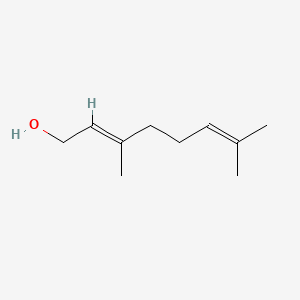
(2E)-3,7-dimethylocta-2,6-dien-1-ol
References
- 1ISO 16128-1:2016 and ISO 16128-2:2017 — Guidelines on technical definitions and criteria for natural and organic cosmetic ingredients and products. ISO, Geneva.
- 2Geraniol. PubChem CID 637566. National Center for Biotechnology Information. pubchem.ncbi.nlm.nih.gov ↗
- 3GERANIOL. CosIng — European Commission cosmetic ingredient database. ec.europa.eu/cosing ↗
- 4GERANIOL. CosIng u2014 European Commission database for information on cosmetic substances and ingredients. https://ec.europa.eu/growth/tools-databases/cosing/search?search=GERANIOL