How we scored it
How it’s made
Where it comes from
Palm-oil palmitic acid esterified with 2-ethylhexanol from propylene via the oxo process.
The industrial synthesis of Ethylhexyl Palmitate is an esterification reaction between 2-ethylhexanol and palmitic acid. This reaction is typically carried out under acidic catalysis, often using sulfuric acid or p-toluenesulfonic acid, to promote the formation of the ester bond and the removal of water.
The reaction is usually performed at elevated temperatures, typically ranging from 150°C to 200°C, to drive the equilibrium towards product formation. Continuous removal of water, often through azeotropic distillation with a suitable solvent, is crucial for achieving high yields. The reaction mixture is heated under reflux conditions until the desired conversion is reached.
Following the esterification, the crude Ethylhexyl Palmitate undergoes several purification steps. These typically include neutralization of the acid catalyst, washing with water to remove residual salts and acids, and decolorization using activated carbon or bleaching earths. Finally, the product is often distilled under vacuum to remove any unreacted starting materials, by-products, and to achieve the desired purity and physical properties for cosmetic use.
In plain English
Ethylhexyl Palmitate is a widely used ingredient in cosmetics and skincare products, often found in lotions, creams, and makeup. It functions primarily as an emollient, meaning it helps to soften and smooth the skin. It creates a protective barrier on the skin's surface, which can help to reduce moisture loss and leave the skin feeling supple and hydrated.
Chemically, it's an ester, formed by combining an alcohol (2-ethylhexanol) with a fatty acid (palmitic acid). While palmitic acid can be derived from natural sources like palm oil, the 2-ethylhexanol component is typically synthesized from petroleum-based raw materials. Therefore, in its most common commercial form, Ethylhexyl Palmitate is considered to be derived from petrochemical sources.
Natural alternatives with the same function
A soft wax from mimosa flowers used to condition skin and add emollience. It is derived directly from…
Acrocomia Aculeata Seed Butter 100% natural originA solid plant fat obtained from the seeds of the macauba palm, a South American tree, used to…
Actinidia Chinensis Fruit Extract 100% natural originAn extract made from kiwi fruit, used in cosmetics as a skin-conditioning and softening ingredient. Comes directly from…
Actinidia Chinensis Seed Oil 100% natural originA plant oil pressed from kiwi seeds, used to soften and condition skin. It's a natural vegetable oil…
Adansonia Digitata Fruit Extract 100% natural originAn extract of baobab fruit, from the African baobab tree. Used as an emollient to soften and smooth…
Adansonia Digitata Oil 100% natural originA rich vegetable oil pressed from the baobab tree's fruit pulp and leaves. Used to soften and condition…
Structure
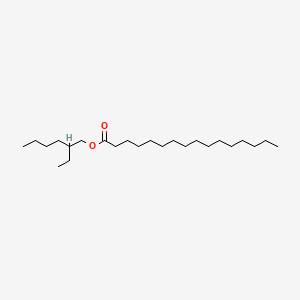
2-ethylhexyl hexadecanoate
References
- 1ISO 16128-1:2016 and ISO 16128-2:2017 — Guidelines on technical definitions and criteria for natural and organic cosmetic ingredients and products. ISO, Geneva.
- 2Ethylhexyl Palmitate. PubChem CID 62851. National Center for Biotechnology Information. pubchem.ncbi.nlm.nih.gov ↗
- 3ETHYLHEXYL PALMITATE. CosIng — European Commission cosmetic ingredient database. ec.europa.eu/cosing ↗
- 4ETHYLHEXYL PALMITATE. CosIng u2014 European Commission database for information on cosmetic substances and ingredients. https://ec.europa.eu/growth/tools-databases/cosing/search?search=ETHYLHEXYL%20PALMITATE