How we scored it
Whole molecule from perilla or citrus essential oil, or made by mild oxidation of natural limonene; every carbon traces to the natural terpene feedstock. 150/150 = 1.0.
What counts. ISO 16128-2 scores the atoms that remain in the final ingredient. Reagents, solvents, catalysts and protecting groups used during manufacture leave no mass behind and are not counted.
Where it comes from
Perillaldehyde is the principal aroma component of perilla leaf oil and is either isolated directly from perilla or citrus essential oils or made by mild oxidation of natural limonene. Both routes trace entirely to plant terpene feedstocks.
In plain English
A minty, herbal fragrance and flavour compound, the main aroma component of perilla leaf oil. It is typically obtained from perilla or citrus oils, or made by lightly modifying natural citrus terpenes.
Structure
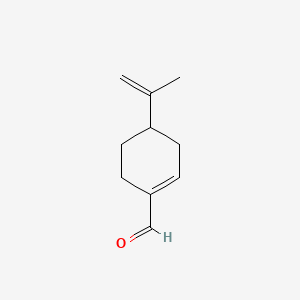
4-prop-1-en-2-ylcyclohexene-1-carbaldehyde
References
- 1ISO 16128-1:2016 and ISO 16128-2:2017 — Guidelines on technical definitions and criteria for natural and organic cosmetic ingredients and products. ISO, Geneva.
- 2Perillaldehyde. PubChem CID 16441. National Center for Biotechnology Information. pubchem.ncbi.nlm.nih.gov ↗
- 3PERILLALDEHYDE. CosIng — European Commission cosmetic ingredient database. ec.europa.eu/cosing ↗
- 4PERILLALDEHYDE. CosIng u2014 European Commission database for information on cosmetic substances and ingredients. https://ec.europa.eu/growth/tools-databases/cosing/search?search=PERILLALDEHYDE