How we scored it
Where it comes from
Butyl Stearate is the ester of oleochemical stearic acid with butanol, which is predominantly produced petrochemically (oxo/aldol route from propylene); a minor bio-fermentation (ABE process) route to butanol exists. This site's convention treats butanol as petrochemical.
In plain English
An emollient and plasticizer that smooths skin and adds shine in cosmetics. It combines a common vegetable-oil fatty acid with butanol, an alcohol that is mostly manufactured from petrochemical feedstock.
Natural alternatives with the same function
A soft wax from mimosa flowers used to condition skin and add emollience. It is derived directly from…
Acrocomia Aculeata Seed Butter 100% natural originA solid plant fat obtained from the seeds of the macauba palm, a South American tree, used to…
Actinidia Chinensis Fruit Extract 100% natural originAn extract made from kiwi fruit, used in cosmetics as a skin-conditioning and softening ingredient. Comes directly from…
Actinidia Chinensis Seed Oil 100% natural originA plant oil pressed from kiwi seeds, used to soften and condition skin. It's a natural vegetable oil…
Adansonia Digitata Fruit Extract 100% natural originAn extract of baobab fruit, from the African baobab tree. Used as an emollient to soften and smooth…
Adansonia Digitata Oil 100% natural originA rich vegetable oil pressed from the baobab tree's fruit pulp and leaves. Used to soften and condition…
Structure
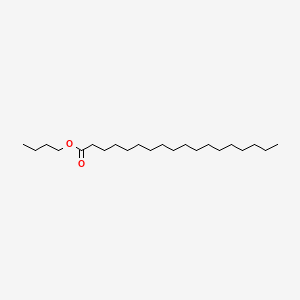
butyl octadecanoate
References
- 1ISO 16128-1:2016 and ISO 16128-2:2017 — Guidelines on technical definitions and criteria for natural and organic cosmetic ingredients and products. ISO, Geneva.
- 2Butyl Stearate. PubChem CID 31278. National Center for Biotechnology Information. pubchem.ncbi.nlm.nih.gov ↗
- 3BUTYL STEARATE. CosIng — European Commission cosmetic ingredient database. ec.europa.eu/cosing ↗
- 4BUTYL STEARATE. CosIng u2014 European Commission database for information on cosmetic substances and ingredients. https://ec.europa.eu/growth/tools-databases/cosing/search?search=BUTYL%20STEARATE