How we scored it
Resveratrol-3-glucoside; commercially isolated/purified from Polygonum cuspidatum root extract, not petrochemically synthesised; whole molecule traced to plant source, 390/390 = 1.0.
What counts. ISO 16128-2 scores the atoms that remain in the final ingredient. Reagents, solvents, catalysts and protecting groups used during manufacture leave no mass behind and are not counted.
Where it comes from
Isolated from the root of Polygonum cuspidatum (Japanese knotweed), a plant long used in traditional medicine. No commercially significant petrochemical synthesis route exists for this glycoside.
In plain English
A plant antioxidant (related to resveratrol) usually obtained from the root of Polygonum cuspidatum, a plant used in traditional herbal medicine.
Structure
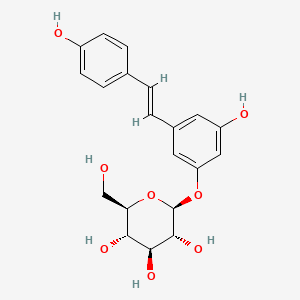
(2S,3R,4S,5S,6R)-2-[3-hydroxy-5-[(E)-2-(4-hydroxyphenyl)ethenyl]phenoxy]-6-(hydroxymethyl)oxane-3,4,5-triol
References
- 1ISO 16128-1:2016 and ISO 16128-2:2017 — Guidelines on technical definitions and criteria for natural and organic cosmetic ingredients and products. ISO, Geneva.
- 2Polydatin. PubChem CID 5281718. National Center for Biotechnology Information. pubchem.ncbi.nlm.nih.gov ↗
- 3POLYDATIN. CosIng — European Commission cosmetic ingredient database. ec.europa.eu/cosing ↗
- 4POLYDATIN. CosIng u2014 European Commission database for information on cosmetic substances and ingredients. https://ec.europa.eu/growth/tools-databases/cosing/search?search=POLYDATIN