How we scored it
Occurs in hop, verbena and bay essential oils; commercial supply is mostly made by pyrolysis-isomerisation of beta-pinene from natural pine turpentine — same formula, no atoms added, so still natural.
What counts. ISO 16128-2 scores the atoms that remain in the final ingredient. Reagents, solvents, catalysts and protecting groups used during manufacture leave no mass behind and are not counted.
Where it comes from
Isolated from essential oils or produced by thermally rearranging beta-pinene from pine turpentine, a natural forestry by-product. Both routes keep the carbon 100% natural origin.
In plain English
A terpene fragrance ingredient with a herbal, woody scent found naturally in hops, bay and thyme. Most of the supply is processed from pine tree resin to isolate this specific molecule.
CosIng definition: Myrcene is the terpene that conforms to the formula:
Structure
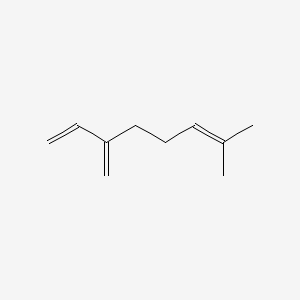
7-methyl-3-methylideneocta-1,6-diene
References
- 1ISO 16128-1:2016 and ISO 16128-2:2017 — Guidelines on technical definitions and criteria for natural and organic cosmetic ingredients and products. ISO, Geneva.
- 2Myrcene. PubChem CID 31253. National Center for Biotechnology Information. pubchem.ncbi.nlm.nih.gov ↗
- 3MYRCENE. CosIng — European Commission cosmetic ingredient database. ec.europa.eu/cosing ↗
- 4MYRCENE. CosIng u2014 European Commission database for information on cosmetic substances and ingredients. https://ec.europa.eu/growth/tools-databases/cosing/search?search=MYRCENE