How we scored it
Where it comes from
Made from coconut or palm-kernel lauric acid condensed with sarcosine, industrially produced from chloroacetic acid and methylamine. This is the free-acid form used as a surfactant intermediate.
In plain English
A mild cleansing surfactant made from coconut fatty acid joined to a small amino-acid-like molecule. Used in toothpaste and gentle cleansers to help lift away dirt and oil.
CosIng definition: N-Lauroylsarcosine
Natural alternatives with the same function
An extract of lemon aspen, an Australian native fruit, used to condition skin and hair and help hold…
Alanine 100% natural originAn amino acid used for skin and hair conditioning, part of skin's natural moisturising factor. Made by fermenting…
Arginine 100% natural originAn amino acid found in skin and hair proteins, used for conditioning and moisture-binding. Made by fermenting plant…
Asparagine 100% natural originAn amino acid made by fermenting plant sugars, similar to other food-fermentation processes. Helps condition hair and skin…
Aspartic Acid 100% natural originAn amino acid used for skin conditioning and moisture retention. Usually produced by fermentation or by an enzyme…
Capryloyl Hydrolyzed Collagen 100% natural originCollagen broken into small protein fragments and attached to caprylic acid, an eight-carbon fatty acid from coconut or…
Structure
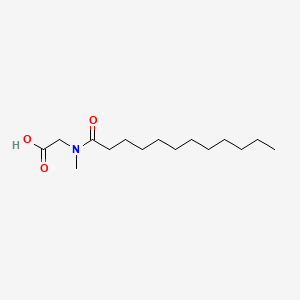
2-[dodecanoyl(methyl)amino]acetic acid
References
- 1ISO 16128-1:2016 and ISO 16128-2:2017 — Guidelines on technical definitions and criteria for natural and organic cosmetic ingredients and products. ISO, Geneva.
- 2Lauroyl Sarcosine. PubChem CID 7348. National Center for Biotechnology Information. pubchem.ncbi.nlm.nih.gov ↗
- 3LAUROYL SARCOSINE. CosIng — European Commission cosmetic ingredient database. ec.europa.eu/cosing ↗
- 4LAUROYL SARCOSINE. CosIng u2014 European Commission database for information on cosmetic substances and ingredients. https://ec.europa.eu/growth/tools-databases/cosing/search?search=LAUROYL%20SARCOSINE