How we scored it
How it’s made
Where it comes from
Isononyl Isononanoate is made by esterifying isononanoic acid with isononyl alcohol, both produced from di-isobutylene via the oxo (hydroformylation) process on petroleum-derived olefins. No commercially significant natural route exists for either fragment.
Isononyl Isononanoate is an ester formed through the esterification reaction between isononanoic acid and isononanol. The industrial synthesis typically involves reacting these two components under acidic catalysis. Common catalysts include sulfuric acid, p-toluenesulfonic acid, or solid acid catalysts like ion-exchange resins.
The reaction is usually carried out at elevated temperatures, typically ranging from 120°C to 180°C, to drive the equilibrium towards ester formation and facilitate the removal of water, a byproduct of the esterification. This water removal is often achieved through azeotropic distillation, using a solvent like toluene or xylene, or by operating under vacuum.
Following the esterification, the crude product undergoes purification steps to remove unreacted starting materials, catalyst residues, and any byproducts. This typically involves neutralization of the acid catalyst, washing with water or dilute alkali solutions, drying, and finally, distillation under vacuum to obtain the high-purity Isononyl Isononanoate. The final product is a clear, colorless to pale yellow liquid with a mild odor.
In plain English
Isononyl Isononanoate is a synthetic ingredient commonly used in cosmetics and skincare products. It's a type of ester, created by combining two alcohol-like molecules, isononanol and isononanoic acid. These starting materials are derived from petroleum, meaning this ingredient is not sourced from plants or animals.
Its primary role in cosmetic formulations is as an emollient. This means it helps to soften, smooth, and condition the skin by forming a protective layer on its surface. This layer helps to reduce water loss from the skin, keeping it hydrated and supple. It also contributes to the luxurious feel of many creams and lotions, improving spreadability and providing a non-greasy finish.
Natural alternatives with the same function
A soft wax from mimosa flowers used to condition skin and add emollience. It is derived directly from…
Acrocomia Aculeata Seed Butter 100% natural originA solid plant fat obtained from the seeds of the macauba palm, a South American tree, used to…
Actinidia Chinensis Fruit Extract 100% natural originAn extract made from kiwi fruit, used in cosmetics as a skin-conditioning and softening ingredient. Comes directly from…
Actinidia Chinensis Seed Oil 100% natural originA plant oil pressed from kiwi seeds, used to soften and condition skin. It's a natural vegetable oil…
Adansonia Digitata Fruit Extract 100% natural originAn extract of baobab fruit, from the African baobab tree. Used as an emollient to soften and smooth…
Adansonia Digitata Oil 100% natural originA rich vegetable oil pressed from the baobab tree's fruit pulp and leaves. Used to soften and condition…
Structure
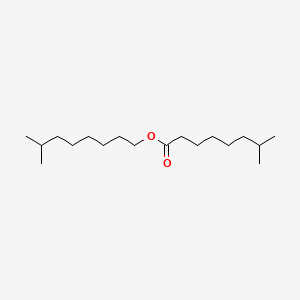
7-methyloctyl 7-methyloctanoate
References
- 1ISO 16128-1:2016 and ISO 16128-2:2017 — Guidelines on technical definitions and criteria for natural and organic cosmetic ingredients and products. ISO, Geneva.
- 2Isononyl Isononanoate. PubChem CID 9882283. National Center for Biotechnology Information. pubchem.ncbi.nlm.nih.gov ↗
- 3ISONONYL ISONONANOATE. CosIng — European Commission cosmetic ingredient database. ec.europa.eu/cosing ↗
- 4ISONONYL ISONONANOATE. CosIng u2014 European Commission database for information on cosmetic substances and ingredients. https://ec.europa.eu/growth/tools-databases/cosing/search?search=ISONONYL%20ISONONANOATE