How we scored it
Ergosterol C28H44O (396.6, natural yeast sterol) undergoes UV photoisomerisation to ergocalciferol, same formula and mass, no atoms added or removed => 396.6/396.6 = 1.0
What counts. ISO 16128-2 scores the atoms that remain in the final ingredient. Reagents, solvents, catalysts and protecting groups used during manufacture leave no mass behind and are not counted.
Where it comes from
Ergocalciferol (vitamin D2) is manufactured by UV-irradiating ergosterol extracted from yeast or fungal biomass, which rearranges the ring structure without changing its atoms. There is no petrochemical alternative route for this ingredient.
In plain English
This is Vitamin D2, used as a skin-conditioning ingredient. It's made by exposing ergosterol, a natural compound from yeast, to UV light, which rearranges its structure into the active vitamin form.
Structure
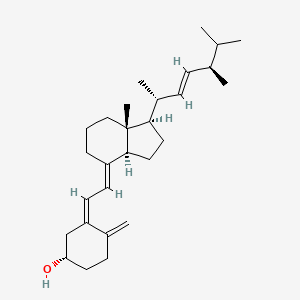
(1S,3Z)-3-[(2E)-2-[(1R,3aS,7aR)-1-[(E,2R,5R)-5,6-dimethylhept-3-en-2-yl]-7a-methyl-2,3,3a,5,6,7-hexahydro-1H-inden-4-ylidene]ethylidene]-4-methylidenecyclohexan-1-ol
References
- 1ISO 16128-1:2016 and ISO 16128-2:2017 — Guidelines on technical definitions and criteria for natural and organic cosmetic ingredients and products. ISO, Geneva.
- 2Ergocalciferol. PubChem CID 5280793. National Center for Biotechnology Information. pubchem.ncbi.nlm.nih.gov ↗
- 3ERGOCALCIFEROL. CosIng — European Commission cosmetic ingredient database. ec.europa.eu/cosing ↗
- 4ERGOCALCIFEROL. CosIng u2014 European Commission database for information on cosmetic substances and ingredients. https://ec.europa.eu/growth/tools-databases/cosing/search?search=ERGOCALCIFEROL