How we scored it
Where it comes from
Made industrially by combining ammonia, produced from natural gas via the Haber process, with carbon dioxide and water. The carbonate ion is mineral in origin, but the ammonium nitrogen follows the same natural-gas convention applied to urea.
In plain English
A mild alkaline buffering salt, historically called 'salt of hartshorn'. Modern commercial supply is made industrially from ammonia and carbon dioxide rather than the old natural source.
Natural alternatives with the same function
An extract of the bark of Alstonia scholaris, a tropical evergreen tree, made by soaking the bark in…
Aluminum Lactate 100% natural originAluminum lactate is a mineral salt of lactic acid, used in deodorants for its astringent, sweat-reducing properties and…
Babassu Acid 100% natural originA blend of fatty acids from babassu palm seed oil, used to cleanse and help stabilise the texture…
Bismuth Citrate 100% natural originA salt formed from bismuth metal and citric acid, a natural fermentation-derived fruit acid, used to buffer, chelate…
Boric Acid 100% natural originA mild mineral acid mined from natural borate deposits or brine. Used in small amounts to buffer pH,…
Calcium Carbonate 100% natural originA finely ground mineral powder from limestone or chalk. Bulks out powders and pastes, acts as a mild…
Structure
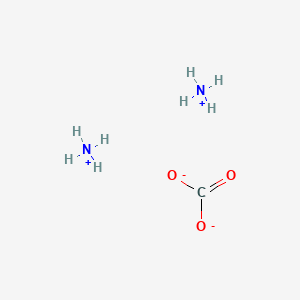
diazanium;carbonate
References
- 1ISO 16128-1:2016 and ISO 16128-2:2017 — Guidelines on technical definitions and criteria for natural and organic cosmetic ingredients and products. ISO, Geneva.
- 2Ammonium Carbonate. PubChem CID 517111. National Center for Biotechnology Information. pubchem.ncbi.nlm.nih.gov ↗
- 3AMMONIUM CARBONATE. CosIng — European Commission cosmetic ingredient database. ec.europa.eu/cosing ↗
- 4AMMONIUM CARBONATE. CosIng u2014 European Commission database for information on cosmetic substances and ingredients. https://ec.europa.eu/growth/tools-databases/cosing/search?search=AMMONIUM%20CARBONATE