How we scored it
Where it comes from
Cyclopentasiloxane is made from silicon metal via the Müller-Rochow process with methyl chloride, then hydrolyzed and cyclized to the pentamer. Although the Si-O backbone originates from mineral silica, this site's convention credits all silicones as 0.0.
The industrial synthesis of cyclopentasiloxane (D5) primarily involves the hydrolysis and subsequent cyclization of dimethyldichlorosilane (DMDCS). DMDCS is itself produced via the direct process (Müller-Rochow process), where silicon metal reacts with methyl chloride at elevated temperatures (around 300°C) in the presence of a copper catalyst. This reaction yields a mixture of methylchlorosilanes, with DMDCS being the major product.
The crude methylchlorosilanes mixture is then fractionally distilled to isolate DMDCS. Subsequently, DMDCS undergoes controlled hydrolysis, typically with water, to form a mixture of linear and cyclic siloxanes. The hydrolysis reaction produces hydrochloric acid as a byproduct, which needs to be neutralized or managed. The primary reaction involves the cleavage of Si-Cl bonds and formation of Si-O-Si linkages.
The resulting mixture of siloxanes is then subjected to further purification, often involving fractional distillation under vacuum, to isolate specific cyclic siloxanes like cyclopentasiloxane (D5). The reaction conditions, catalyst choice, and purification steps are critical for achieving the desired purity and yield of D5. The overall process is energy-intensive due to the high temperatures required for the direct process and the distillation steps.
In plain English
Cyclopentasiloxane is a synthetic silicone ingredient commonly used in cosmetics. It's valued for its light, non-greasy feel and its ability to spread easily on the skin and hair. Think of it as a smooth, silky carrier that helps other ingredients in your product distribute evenly and evaporate quickly, leaving behind a pleasant, soft finish without a heavy residue.
It's made through a complex chemical process that starts with basic elements like silicon, which comes from sand, and carbon, often derived from natural gas or coal. These raw materials are transformed through high-temperature reactions and purification steps to create the final cyclopentasiloxane molecule. Because its origins are from mineral and fossil fuel sources, it is classified as petroleum-derived under natural ingredient standards.
CosIng definition: Cyclopentasiloxane is the cyclic dimethyl polysiloxane that conforms to the formula:
Natural alternatives with the same function
A soft wax from mimosa flowers used to condition skin and add emollience. It is derived directly from…
Acrocomia Aculeata Seed Butter 100% natural originA solid plant fat obtained from the seeds of the macauba palm, a South American tree, used to…
Actinidia Chinensis Fruit Extract 100% natural originAn extract made from kiwi fruit, used in cosmetics as a skin-conditioning and softening ingredient. Comes directly from…
Actinidia Chinensis Seed Oil 100% natural originA plant oil pressed from kiwi seeds, used to soften and condition skin. It's a natural vegetable oil…
Adansonia Digitata Fruit Extract 100% natural originAn extract of baobab fruit, from the African baobab tree. Used as an emollient to soften and smooth…
Adansonia Digitata Oil 100% natural originA rich vegetable oil pressed from the baobab tree's fruit pulp and leaves. Used to soften and condition…
Structure
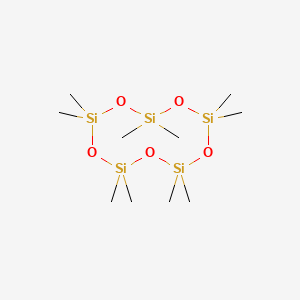
2,2,4,4,6,6,8,8,10,10-decamethyl-1,3,5,7,9,2,4,6,8,10-pentaoxapentasilecane
References
- 1ISO 16128-1:2016 and ISO 16128-2:2017 — Guidelines on technical definitions and criteria for natural and organic cosmetic ingredients and products. ISO, Geneva.
- 2Cyclopentasiloxane. PubChem CID 10913. National Center for Biotechnology Information. pubchem.ncbi.nlm.nih.gov ↗
- 3CYCLOPENTASILOXANE. CosIng — European Commission cosmetic ingredient database. ec.europa.eu/cosing ↗
- 4CYCLOPENTASILOXANE. CosIng u2014 European Commission database for information on cosmetic substances and ingredients. https://ec.europa.eu/growth/tools-databases/cosing/search?search=CYCLOPENTASILOXANE