How we scored it
Where it comes from
Coconut or palm-kernel lauric acid amidated with DMAPA and quaternised with sodium chloroacetate, the same chemistry as cocamidopropyl betaine.
In plain English
A mild foaming cleanser ingredient used in shampoos and body washes to soften harsher surfactants. Its fatty part comes from coconut oil; the small charged head group is made from petrochemicals.
Natural alternatives with the same function
An extract of lemon aspen, an Australian native fruit, used to condition skin and hair and help hold…
Alanine 100% natural originAn amino acid used for skin and hair conditioning, part of skin's natural moisturising factor. Made by fermenting…
Arginine 100% natural originAn amino acid found in skin and hair proteins, used for conditioning and moisture-binding. Made by fermenting plant…
Asparagine 100% natural originAn amino acid made by fermenting plant sugars, similar to other food-fermentation processes. Helps condition hair and skin…
Aspartic Acid 100% natural originAn amino acid used for skin conditioning and moisture retention. Usually produced by fermentation or by an enzyme…
Capryloyl Hydrolyzed Collagen 100% natural originCollagen broken into small protein fragments and attached to caprylic acid, an eight-carbon fatty acid from coconut or…
Structure
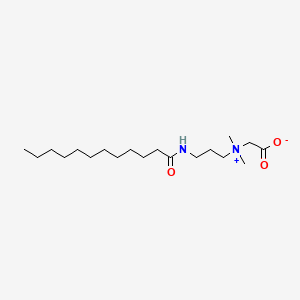
2-[3-(dodecanoylamino)propyl-dimethylazaniumyl]acetate
References
- 1ISO 16128-1:2016 and ISO 16128-2:2017 — Guidelines on technical definitions and criteria for natural and organic cosmetic ingredients and products. ISO, Geneva.
- 2Lauramidopropyl Betaine. PubChem CID 20280. National Center for Biotechnology Information. pubchem.ncbi.nlm.nih.gov ↗
- 3LAURAMIDOPROPYL BETAINE. CosIng — European Commission cosmetic ingredient database. ec.europa.eu/cosing ↗
- 4LAURAMIDOPROPYL BETAINE. CosIng u2014 European Commission database for information on cosmetic substances and ingredients. https://ec.europa.eu/growth/tools-databases/cosing/search?search=LAURAMIDOPROPYL%20BETAINE