How we scored it
Where it comes from
Made by esterifying linoleic acid, obtained from vegetable oils such as safflower or sunflower, with petrochemical isopropanol. Isopropanol has no significant natural cosmetic route.
In plain English
A lightweight emollient that softens and conditions skin. Made by combining linoleic acid from vegetable oil with isopropanol, a petroleum-derived alcohol.
Natural alternatives with the same function
A gelling and thickening gum extracted from red seaweed. It is used to give products body and texture,…
Algin 100% natural originSodium alginate, a thickening and binding gum extracted from brown seaweed. It's harvested from algae and processed to…
Alginic Acid 100% natural originA gelling and thickening gum extracted from brown seaweed, the acid form of alginate. It's harvested and purified…
Aluminum Zinc Oxide 100% natural originA white mineral powder made from zinc and aluminium oxides. It adds opacity, bulk and absorbency to powders…
Amylopectin 100% natural originA binding and thickening ingredient that is the highly branched component of plant starch, typically sourced from corn,…
Astragalus Gummifer Gum 100% natural originA natural plant gum, known as tragacanth, harvested from a Middle Eastern shrub. Used as a thickener and…
Structure
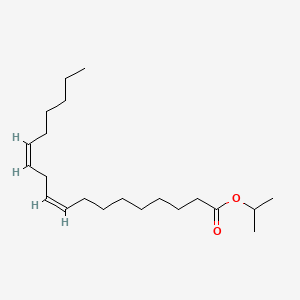
propan-2-yl (9Z,12Z)-octadeca-9,12-dienoate
References
- 1ISO 16128-1:2016 and ISO 16128-2:2017 — Guidelines on technical definitions and criteria for natural and organic cosmetic ingredients and products. ISO, Geneva.
- 2Isopropyl Linoleate. PubChem CID 5352860. National Center for Biotechnology Information. pubchem.ncbi.nlm.nih.gov ↗
- 3ISOPROPYL LINOLEATE. CosIng — European Commission cosmetic ingredient database. ec.europa.eu/cosing ↗
- 4ISOPROPYL LINOLEATE. CosIng u2014 European Commission database for information on cosmetic substances and ingredients. https://ec.europa.eu/growth/tools-databases/cosing/search?search=ISOPROPYL%20LINOLEATE