How we scored it
Where it comes from
Eugenyl acetate is made by acetylating eugenol isolated by distillation from clove bud oil (Syzygium aromaticum), the dominant commercial route. The acetylating agent, acetic anhydride, is petrochemical.
In plain English
A clove-scented fragrance ingredient used to perfume cosmetics. Made by treating natural clove oil's eugenol with a lab-made acetylating chemical, so it's mostly plant-derived with one small synthetic addition.
Natural alternatives with the same function
Dihydromyrcenol, a fresh, citrus-lime, slightly metallic fragrance ingredient used in many perfumes and cleaning products. It is made…
4-Terpineol 100% natural originA woody, peppery-smelling terpene alcohol and the main fragrant component of tea tree oil. It is used for…
Abies Alba Leaf Oil 100% natural originEssential oil distilled from fir tree needles, used for its fresh, woody fragrance. A whole natural essential oil.
Abies Balsamea Resin 100% natural originA sticky resin tapped from balsam fir trees, used for its piney scent and to form a thin…
Abies Sachalinensis Leaf Oil 100% natural originAn essential oil steam-distilled from Sakhalin fir needles, giving a fresh, woody fragrance to cosmetics and perfumes. It…
Abies Sibirica Oil 100% natural originA fresh, piney fragrance oil steam-distilled from Siberian fir needles and branches. It comes directly from the tree…
Structure
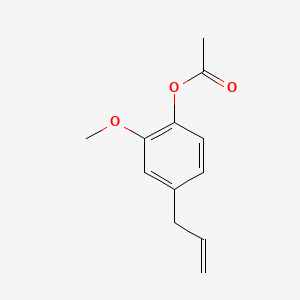
(2-methoxy-4-prop-2-enylphenyl) acetate
References
- 1ISO 16128-1:2016 and ISO 16128-2:2017 — Guidelines on technical definitions and criteria for natural and organic cosmetic ingredients and products. ISO, Geneva.
- 2Eugenyl Acetate. PubChem CID 7136. National Center for Biotechnology Information. pubchem.ncbi.nlm.nih.gov ↗
- 3EUGENYL ACETATE. CosIng — European Commission cosmetic ingredient database. ec.europa.eu/cosing ↗
- 4EUGENYL ACETATE. CosIng u2014 European Commission database for information on cosmetic substances and ingredients. https://ec.europa.eu/growth/tools-databases/cosing/search?search=EUGENYL%20ACETATE