How we scored it
Where it comes from
The potassium comes from mineral potash. The acetate group is dominantly manufactured from petrochemical methanol by the carbonylation (Cativa/Monsanto) process; fermentation (vinegar) acetic acid is a minor, mainly food-grade route.
In plain English
A potassium salt of acetic acid, used to help products form a thin film on skin or hair. The potassium is mineral-derived; the acetate is mostly made from petrochemical methanol.
Natural alternatives with the same function
A sticky resin tapped from balsam fir trees, used for its piney scent and to form a thin…
Acacia Senegal Gum 100% natural originThe dried gum exuded from the acacia tree, collected by tapping the bark. Used to form a film…
Albumen 100% natural originEgg white. Used in cosmetics to form a film on skin or hair and to help condition them.
Amorphophallus Konjac Root Extract 100% natural originA root extract from the konjac plant that helps form a light film on skin and hair and…
Astragalus Gummifer Gum 100% natural originA natural plant gum, known as tragacanth, harvested from a Middle Eastern shrub. Used as a thickener and…
Aureobasidium Pullulans Ferment Extract 100% natural originAn extract of the liquid left after the yeast-like fungus Aureobasidium pullulans is grown on sugars in a…
Structure
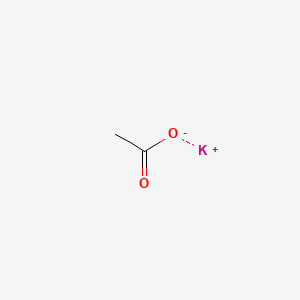
potassium acetate
References
- 1ISO 16128-1:2016 and ISO 16128-2:2017 — Guidelines on technical definitions and criteria for natural and organic cosmetic ingredients and products. ISO, Geneva.
- 2Potassium Acetate. PubChem CID 517044. National Center for Biotechnology Information. pubchem.ncbi.nlm.nih.gov ↗
- 3POTASSIUM ACETATE. CosIng — European Commission cosmetic ingredient database. ec.europa.eu/cosing ↗
- 4POTASSIUM ACETATE. CosIng u2014 European Commission database for information on cosmetic substances and ingredients. https://ec.europa.eu/growth/tools-databases/cosing/search?search=POTASSIUM%20ACETATE