How we scored it
Where it comes from
Synthesised from petrochemical naphthalene and aniline via diazotisation. No natural-isolation route exists for this dye.
In plain English
A fully synthetic dye used to colour products, built entirely from petrochemical aromatic building blocks.
CosIng definition: CI 26100 is classed chemically as a disazo colour. It conforms to the formula:
Natural alternatives with the same function
Finely powdered aluminum metal used to add shimmer or color to cosmetics. It comes from refining bauxite ore,…
Aluminum Stearate 100% natural originAn aluminium salt of stearic acid, a fatty acid from vegetable or animal fat. Used to prevent caking,…
Anthocyanins 100% natural originA natural colorant that gives products red, purple or blue tones. It is recovered from grape skins or…
Calcium Ferrite 100% natural originA mineral pigment made of calcium and iron oxide, used as a colourant in cosmetics. It is produced…
Calcium Stearate 100% natural originThe calcium salt of stearic acid, a fatty acid usually from vegetable oils. Used as an anti-caking, thickening…
Caramel 100% natural originA colouring and fragrance ingredient made by heating sugar, sucrose or glucose, until it browns. It comes from…
Structure
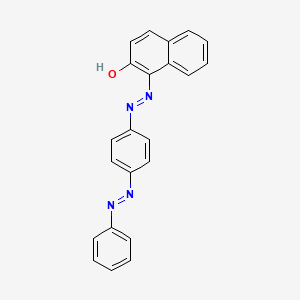
1-[(4-phenyldiazenylphenyl)diazenyl]naphthalen-2-ol
References
- 1ISO 16128-1:2016 and ISO 16128-2:2017 — Guidelines on technical definitions and criteria for natural and organic cosmetic ingredients and products. ISO, Geneva.
- 2CI 26100. PubChem CID 62331. National Center for Biotechnology Information. pubchem.ncbi.nlm.nih.gov ↗
- 3CI 26100. CosIng — European Commission cosmetic ingredient database. ec.europa.eu/cosing ↗
- 4CI 26100. CosIng u2014 European Commission database for information on cosmetic substances and ingredients. https://ec.europa.eu/growth/tools-databases/cosing/search?search=CI%2026100