How we scored it
Where it comes from
The industrial route is acid or base hydrolysis of epsilon-caprolactam from petrochemical cyclohexanone oxime. Bio-based caprolactam routes from lysine or sugars have been piloted but are not commercially significant.
In plain English
A six-carbon amino acid that is not one of the protein-building amino acids. It is made industrially by splitting caprolactam, a petrochemical also used to make nylon.
Natural alternatives with the same function
A vegetable oil taken from the kernel inside the stone of the fruit of the macauba palm, a…
Empetrum Nigrum Fruit Extract 100% natural originAn extract of crowberry fruit used as a conditioning ingredient in cosmetic formulas.
Ganoderma Lucidum Powder 100% natural originA powder made from ground, dried reishi mushroom, used as a skin-conditioning ingredient. It comes straight from the…
Glyceryl Lactate 100% natural originA moisturizing ingredient formed by combining glycerin with lactic acid. Both come from plant oils and fermentation, and…
Pearl Powder 100% natural originA fine powder made from ground natural pearls, used in skincare for subtle shimmer and mild conditioning. It's…
Pimpinella Anisum Extract 100% natural originAn extract of the whole anise plant, a culinary herb and spice. Used as a functional ingredient in…
Structure
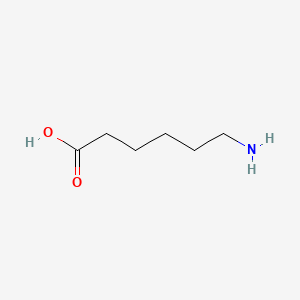
6-aminohexanoic acid
References
- 1ISO 16128-1:2016 and ISO 16128-2:2017 — Guidelines on technical definitions and criteria for natural and organic cosmetic ingredients and products. ISO, Geneva.
- 26-Aminocaproic Acid. PubChem CID 564. National Center for Biotechnology Information. pubchem.ncbi.nlm.nih.gov ↗
- 36-AMINOCAPROIC ACID. CosIng — European Commission cosmetic ingredient database. ec.europa.eu/cosing ↗
- 46-AMINOCAPROIC ACID. CosIng u2014 European Commission database for information on cosmetic substances and ingredients. https://ec.europa.eu/growth/tools-databases/cosing/search?search=6-AMINOCAPROIC%20ACID