How we scored it
Where it comes from
Made by sulfonating cumene (isopropylbenzene), an aromatic hydrocarbon produced from petroleum-derived benzene and propylene, then neutralising with sodium hydroxide. There is no commercial natural route to the cumene ring.
In plain English
A hydrotrope that keeps other cleansing ingredients dissolved so liquid soaps and shampoos stay clear rather than clouding or separating. It's made from cumene, an aromatic building block refined from crude oil.
CosIng definition: Cumene, monosulpho derivative, sodium salt
Natural alternatives with the same function
A leaf water made by steam-distilling manuka leaves. It helps formulas hold moisture and adds mild conditioning. Produced…
Polyglyceryl-4 Caprylate/Caprate 100% natural originA cleansing and dispersing ingredient made by combining plant glycerin with coconut-derived caprylic and capric fatty acids. Used…
Polyglyceryl-4 Laurate/Sebacate 100% natural originA mild emulsifier and cleansing ingredient that helps oils and water mix and dissolves other ingredients. It is…
Sodium Cocoyl Hydrolyzed Pea Protein 100% natural originA foaming cleanser and hydrotrope (it helps oils mix with water). It joins coconut fatty acid to small…
Structure
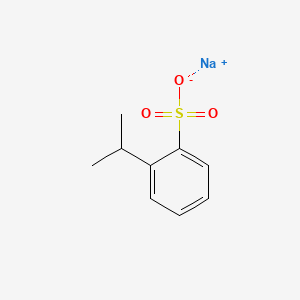
sodium 2-propan-2-ylbenzenesulfonate
References
- 1ISO 16128-1:2016 and ISO 16128-2:2017 — Guidelines on technical definitions and criteria for natural and organic cosmetic ingredients and products. ISO, Geneva.
- 2Sodium Cumenesulfonate. PubChem CID 23665765. National Center for Biotechnology Information. pubchem.ncbi.nlm.nih.gov ↗
- 3SODIUM CUMENESULFONATE. CosIng — European Commission cosmetic ingredient database. ec.europa.eu/cosing ↗
- 4SODIUM CUMENESULFONATE. CosIng u2014 European Commission database for information on cosmetic substances and ingredients. https://ec.europa.eu/growth/tools-databases/cosing/search?search=SODIUM%20CUMENESULFONATE