How we scored it
Lauryl alcohol C12H26O 186 Da (oleochemical) + 9 EO C2H4O 396 Da (petrochemical) = 583 Da total; 186/583 = 0.32.
What counts. ISO 16128-2 scores the atoms that remain in the final ingredient. Reagents, solvents, catalysts and protecting groups used during manufacture leave no mass behind and are not counted.
Where it comes from
Made by ethoxylating coconut/palm-kernel lauryl alcohol with 9 moles of petrochemical ethylene oxide. Higher EO count means more petrochemical mass than lower-EO laureths.
In plain English
An emulsifier that helps oil and water blend, made from coconut- or palm-derived fatty alcohol reacted with nine units of ethylene oxide. Heavier ethoxylation makes it more water-loving than shorter-chain versions.
Structure
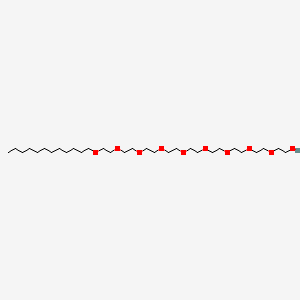
2-[2-[2-[2-[2-[2-[2-[2-(2-dodecoxyethoxy)ethoxy]ethoxy]ethoxy]ethoxy]ethoxy]ethoxy]ethoxy]ethanol
References
- 1ISO 16128-1:2016 and ISO 16128-2:2017 — Guidelines on technical definitions and criteria for natural and organic cosmetic ingredients and products. ISO, Geneva.
- 2Laureth-9. PubChem CID 656641. National Center for Biotechnology Information. pubchem.ncbi.nlm.nih.gov ↗
- 3LAURETH-9. CosIng — European Commission cosmetic ingredient database. ec.europa.eu/cosing ↗
- 4Laureth-9. CosIng u2014 European Commission database for information on cosmetic substances and ingredients. https://ec.europa.eu/growth/tools-databases/cosing/search?search=Laureth-9