How we scored it
Where it comes from
Made by diazotising o-nitroaniline, coupling with p-cresol and reducing to the benzotriazole, all from petrochemical aromatics. No natural-origin route exists.
In plain English
A synthetic UV absorber, a benzotriazole phenol also sold as Tinuvin P, that soaks up ultraviolet light to protect the product itself from sunlight. It is made from petrochemical raw materials.
Natural alternatives with the same function
An extract of sunflower seeds used in skincare and haircare to condition skin and hair and offer mild…
Manganese Oxide 100% natural originA dark mineral powder that absorbs ultraviolet and visible light, used in small amounts as a colourant or…
Spirulina Platensis Powder 100% natural originA powder made from dried, ground Spirulina algae. Used in skincare to help protect and condition the skin.
Tocotrienols 100% natural originA form of vitamin E extracted from sources like palm oil, rice bran, or annatto. Used in skin…
Zinc Ascorbate Hydroxide 100% natural originA zinc salt of vitamin C made by reacting ascorbic acid with zinc chloride and sodium hydroxide. It…
Structure
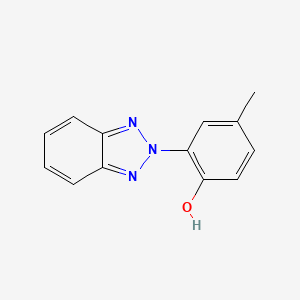
2-(benzotriazol-2-yl)-4-methylphenol
References
- 1ISO 16128-1:2016 and ISO 16128-2:2017 — Guidelines on technical definitions and criteria for natural and organic cosmetic ingredients and products. ISO, Geneva.
- 2Drometrizole. PubChem CID 17113. National Center for Biotechnology Information. pubchem.ncbi.nlm.nih.gov ↗
- 3DROMETRIZOLE. CosIng — European Commission cosmetic ingredient database. ec.europa.eu/cosing ↗
- 4DROMETRIZOLE. CosIng u2014 European Commission database for information on cosmetic substances and ingredients. https://ec.europa.eu/growth/tools-databases/cosing/search?search=DROMETRIZOLE