How we scored it
Where it comes from
Yeast-fermented phytosphingosine plus alpha-hydroxystearic acid derived from palm stearic acid.
The industrial synthesis of Ceramide AP (N-stearoylphytosphingosine) is a multi-step process. It typically begins with the preparation of phytosphingosine or a related sphingoid base. This can be achieved through various routes, including chemical synthesis starting from simpler molecules or biotechnological fermentation processes.
Concurrently, the fatty acid component, stearic acid (C18:0), is prepared. Stearic acid can be sourced from the hydrolysis of animal fats or vegetable oils (e.g., palm oil, cocoa butter), or it can be synthesized from petrochemical sources. For cosmetic applications, plant-derived stearic acid is common, contributing to the renewable aspect.
The key step is the amidation reaction where the amine group of the sphingoid base reacts with the carboxyl group of the fatty acid to form the amide linkage characteristic of ceramides. This reaction is typically carried out under controlled conditions, often involving activating the fatty acid (e.g., as an acid chloride or using coupling reagents) and reacting it with the sphingoid base in a suitable solvent. Temperatures can range from ambient to moderately elevated, depending on the specific reagents and catalysts used.
Purification is crucial to obtain high-purity Ceramide AP. This usually involves crystallization, chromatography, or washing steps to remove unreacted starting materials, byproducts, and residual solvents. The final product is typically a white to off-white powder.
In plain English
Ceramide AP is a type of lipid, specifically a ceramide, that is naturally found in the skin's outermost layer, the epidermis. Ceramides are essential components of the skin's barrier function, helping to retain moisture and protect against environmental aggressors. In cosmetic products, Ceramide AP is added to help replenish the skin's natural ceramide levels, which can deplete over time due to aging or environmental factors.
When used in skincare, Ceramide AP works by integrating into the skin's lipid structure. This helps to strengthen the skin barrier, leading to improved hydration, reduced dryness, and a smoother, more supple complexion. It's particularly beneficial for dry, sensitive, or mature skin types that may have a compromised skin barrier.
CosIng definition: Ceramide AP, formerly known under the INCI name Ceramide 6 II, is the N-acylated sphingolipid consisting of Phytosphingosine having the D-erythro structure linked to an alpha-hydroxy saturated or unsaturated fatty acid.
Structure
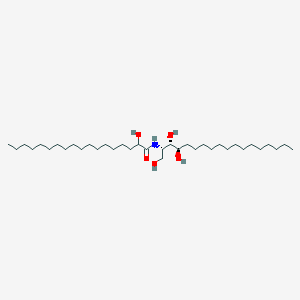
2-hydroxy-N-[(2S,3S,4R)-1,3,4-trihydroxyoctadecan-2-yl]octadecanamide
References
- 1ISO 16128-1:2016 and ISO 16128-2:2017 — Guidelines on technical definitions and criteria for natural and organic cosmetic ingredients and products. ISO, Geneva.
- 2Ceramide AP. PubChem CID 44625889. National Center for Biotechnology Information. pubchem.ncbi.nlm.nih.gov ↗
- 3CERAMIDE AP. CosIng — European Commission cosmetic ingredient database. ec.europa.eu/cosing ↗
- 4CERAMIDE AP. CosIng u2014 European Commission database for information on cosmetic substances and ingredients. https://ec.europa.eu/growth/tools-databases/cosing/search?search=CERAMIDE%20AP