How we scored it
Where it comes from
Predominantly isolated from sugar beet (Beta vulgaris) molasses/vinasse generated during sugar refining, the standard cosmetic-grade source. A synthetic route from chloroacetic acid and trimethylamine exists but mainly serves feed/industrial-grade markets.
Commercial betaine is predominantly obtained through extraction and purification from sugar beet molasses. The process begins with the separation of sugar from the beet pulp. The remaining liquid, molasses, contains a high concentration of betaine.
Purification typically involves several steps to isolate betaine from other sugars and salts present in the molasses. Techniques such as ion exchange chromatography, crystallization, and solvent extraction are employed. Ion exchange is particularly effective in separating betaine, which is a zwitterionic compound, from other charged species.
Crystallization is often used as a final purification step to obtain high-purity betaine. The purified betaine is then dried and processed into its final form, typically as a crystalline powder or an aqueous solution. The entire process leverages natural biological processes and byproducts, aligning with the principles of renewable sourcing.
In plain English
Betaine is a naturally occurring compound found in plants, most notably in sugar beets. It's often called a 'sugar-free' component of sugar beets, as it's a byproduct of the sugar-making process. Think of it like a beneficial extra that's left over after the main product (sugar) is extracted.
In cosmetics, betaine acts as a fantastic moisturizer. It helps your skin and hair hold onto water, keeping them hydrated and soft. This makes it a popular ingredient in skincare products like lotions and serums, as well as in hair care items such as shampoos and conditioners, to improve texture and prevent dryness.
CosIng definition: Betaine is the zwitterion (inner salt) that conforms to the formula
Structure
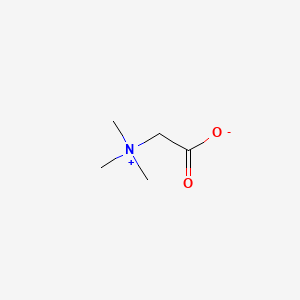
2-(trimethylazaniumyl)acetate
References
- 1ISO 16128-1:2016 and ISO 16128-2:2017 — Guidelines on technical definitions and criteria for natural and organic cosmetic ingredients and products. ISO, Geneva.
- 2Betaine. PubChem CID 247. National Center for Biotechnology Information. pubchem.ncbi.nlm.nih.gov ↗
- 3BETAINE. CosIng — European Commission cosmetic ingredient database. ec.europa.eu/cosing ↗
- 4BETAINE. CosIng u2014 European Commission database for information on cosmetic substances and ingredients. https://ec.europa.eu/growth/tools-databases/cosing/search?search=BETAINE