Synthesis Routes
Why the score varies
This ingredient can be manufactured via multiple distinct synthesis pathways — some starting from petroleum feedstocks, others from renewable biological sources. ISO 16128-2 assigns the NOI based on the actual feedstock used, which means the score depends entirely on which route your specific supplier uses.
Without supplier documentation, this ingredient cannot be claimed as renewable. Certification requires verified feedstock provenance.
Chemical Structure
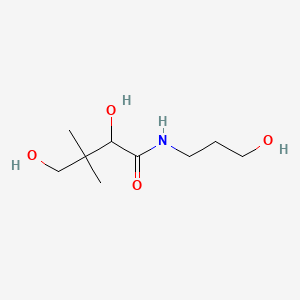
Learn about Panthenol — its natural origin index (ISO 16128), feedstock sources, synthesis process, and renewability classification.
View full data on PubChem ↗Quick Facts
- INCI NamePanthenol
- IUPAC Name2,4-dihydroxy-N-(3-hydroxypropyl)-3,3-dimethylbutanamide
- Molecular FormulaC9H19NO4
- PubChem CID4678 ↗
- FunctionsSkin Conditioning AgentHumectantHair Conditioning Agent
- Primary FeedstockPanthenol's primary commercial feedstocks depend on the synthesis route. The petrochemical route typically starts from isobutyraldehyde and formaldehyde, which are derived from petroleum. The bio-derived route utilizes fermentation processes, often starting from sugars or other renewable carbon sources to produce precursors.
- NOI Score0.0 / 1.0
- TierRoute-Dependent
Description
Learn about Panthenol — its natural origin index (ISO 16128), feedstock sources, synthesis process, and renewability classification.
References
- 1ISO 16128-2:2017 — Guidelines on technical definitions and criteria for natural and organic cosmetic ingredients and products — Part 2. ISO, Geneva.
- 2Panthenol. National Center for Biotechnology Information. PubChem CID 4678. pubchem.ncbi.nlm.nih.gov ↗